


Introduction
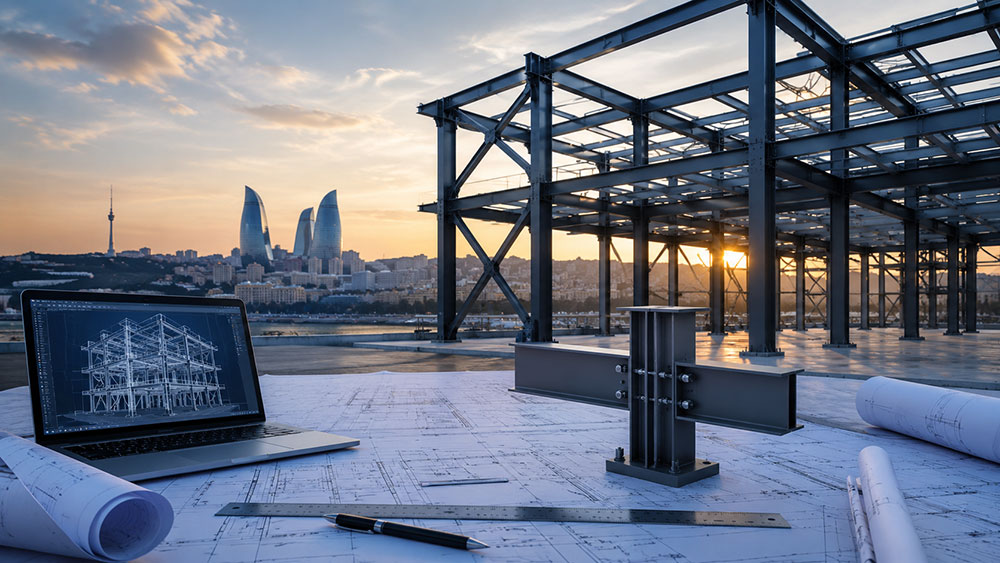
In recent years, Azerbaijan has witnessed significant growth in construction and infrastructure development. Large-scale industrial facilities, commercial complexes, logistics centers, office towers, and energy-related projects have become an essential part of the country’s expanding urban and industrial landscape. The development of Baku as a regional economic hub, along with numerous projects related to the Caspian Sea energy sector, has created increasing demand for efficient, reliable, and technologically advanced structural solutions.
Steel structures play a crucial role in many of these projects due to their high strength-to-weight ratio, flexibility in architectural design, and efficiency in construction. However, the increasing scale and complexity of modern projects require more advanced design approaches than traditional two-dimensional drafting methods.
Three-dimensional structural design has therefore become an essential component of contemporary engineering practice. Through advanced modeling technologies, engineers are able to visualize structural systems more accurately, analyze complex load interactions, and coordinate multiple engineering disciplines before construction begins. This approach significantly improves project efficiency, reduces potential conflicts during construction, and enhances overall design quality.
Understanding Azerbaijan’s Climatic and Seismic Conditions in 3D Structural Design
Designing steel structures in Azerbaijan requires careful consideration of the country’s environmental and geological conditions. The region experiences a wide range of climatic influences, including strong coastal winds along the Caspian Sea, varying snowfall levels in mountainous areas, and seismic activity due to regional tectonic conditions. These factors must be accurately incorporated into the structural design process to ensure safety, durability, and long-term performance.
Three-dimensional structural modeling enables engineers to simulate how structures behave under these environmental loads. By integrating wind loads, seismic forces, snow loads, and other environmental parameters into analytical models, engineers can evaluate structural performance more realistically and identify potential vulnerabilities before construction begins.
Wind Effects in Coastal Regions
The coastal areas of Azerbaijan, particularly around Baku and the Absheron Peninsula, are known for strong and persistent winds. These wind conditions can create significant lateral forces on tall buildings, industrial structures, and large-span steel systems.
In three-dimensional structural analysis, wind loads are applied to the model based on regional wind data and aerodynamic characteristics of the structure. The interaction between wind pressure, structural geometry, and stiffness distribution must be carefully evaluated to ensure that the structure remains stable and serviceable under extreme wind conditions.
Advanced 3D analysis allows engineers to study how wind forces are transferred through the structural system, how lateral displacements occur, and how structural elements such as bracing systems or moment frames contribute to overall stability.
Seismic Considerations
Azerbaijan is located in a seismically active region influenced by the collision of major tectonic plates. As a result, seismic loads must be carefully considered in the design of steel structures, particularly in critical infrastructure and large buildings.
Three-dimensional structural models allow engineers to evaluate how seismic forces propagate through the structural system. Key factors such as structural ductility, stiffness distribution, and lateral load-resisting systems play a crucial role in determining how a building responds during an earthquake.
Through advanced structural analysis methods, engineers can assess potential deformation patterns, identify critical structural components, and design systems capable of dissipating seismic energy while maintaining structural integrity.
Snow Loads in Mountainous Regions
While coastal areas experience strong winds, mountainous regions of Azerbaijan are subject to seasonal snowfall that can create significant loads on building roofs and long-span structures.
In three-dimensional design environments, snow loads can be applied based on regional climatic data and roof geometry. Engineers must consider potential uneven snow distribution, snow accumulation in roof valleys, and localized load concentrations. These factors are especially important in large-span steel structures such as warehouses, industrial facilities, and sports complexes.
Accurate modeling of snow loads ensures that roof structures, trusses, and supporting elements are capable of safely carrying these loads without excessive deflection or structural stress.
Advanced Structural Analysis in 3D Environments
Modern structural engineering relies heavily on advanced analysis tools integrated within three-dimensional modeling environments. These tools allow engineers to evaluate complex structural behavior under various loading conditions.
Through numerical analysis methods, engineers can simulate structural responses to gravity loads, environmental forces, and dynamic effects. Three-dimensional modeling makes it possible to understand load paths, identify critical stress points, and optimize the overall structural system.
Such analyses provide valuable insights that help engineers design structures that are both efficient and safe, while also reducing unnecessary material use and improving structural performance.
Evolution of Design Methods in Steel Structures
Traditionally, structural design relied on two-dimensional drawings and manual coordination between different engineering disciplines. While these methods were effective for simpler projects, they often led to coordination challenges in large and complex developments.
With the advancement of digital technologies, three-dimensional modeling has become a standard practice in modern structural engineering. Instead of interpreting multiple drawings, engineers and project stakeholders can now work with integrated digital models that represent the entire structural system.
This shift has significantly improved communication among project teams and has reduced the likelihood of design conflicts that might otherwise appear during construction.
Importance of 3D Modeling in Steel Structure Design
Three-dimensional modeling plays a critical role in the design of modern steel structures. By creating a digital representation of the structural system, engineers can visualize how different components interact and ensure that all structural elements are properly aligned.
This modeling approach allows engineers to examine structural behavior more clearly, evaluate design alternatives, and detect potential design issues early in the process. As a result, design accuracy improves and costly modifications during construction can be minimized.
Additionally, three-dimensional models provide valuable visual tools that help architects, engineers, and project managers better understand the overall structural concept.
Coordination Between Different Engineering Disciplines
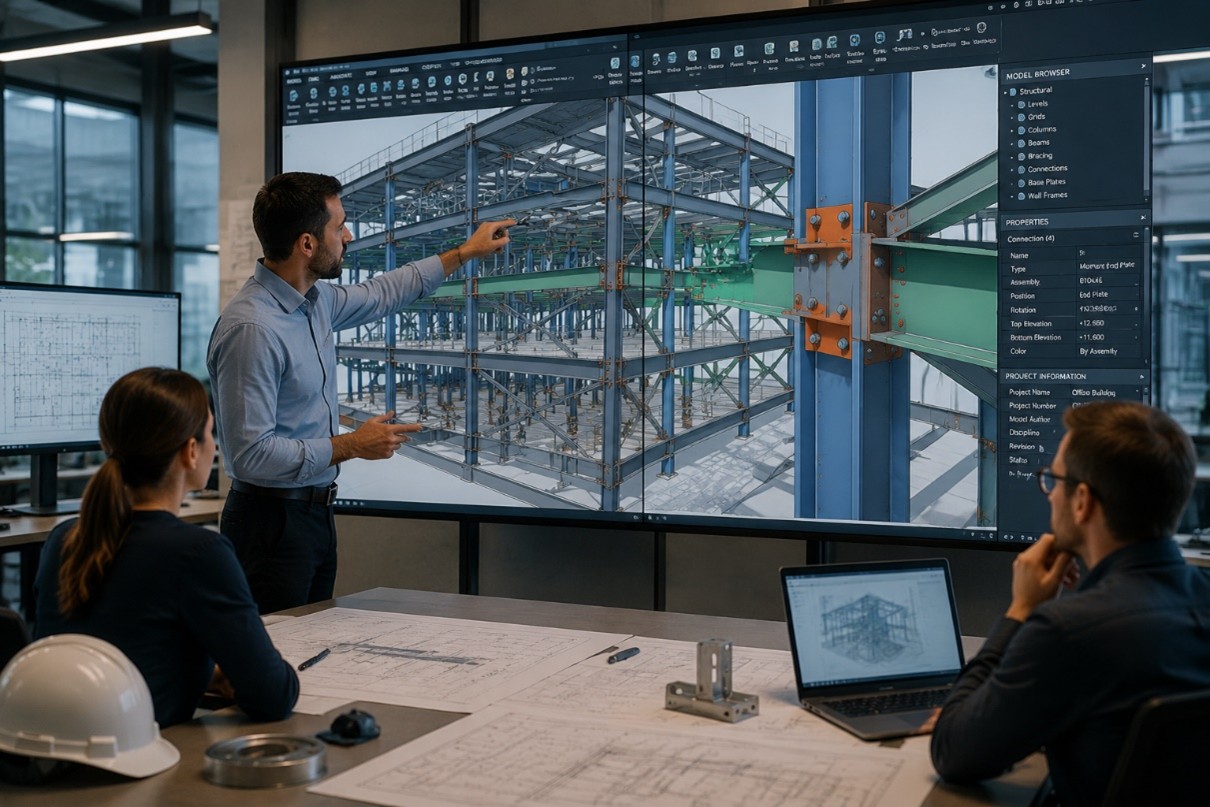
Modern construction projects require close collaboration between multiple engineering disciplines, including structural engineering, architecture, and mechanical, electrical, and plumbing (MEP) systems.
Three-dimensional models provide a shared environment in which these disciplines can coordinate their designs. By working within a unified digital model, potential conflicts—such as clashes between structural elements and mechanical systems—can be identified and resolved before construction begins.
This level of coordination improves project efficiency and reduces the risk of costly modifications during the construction phase.
Precise Design of Steel Connections
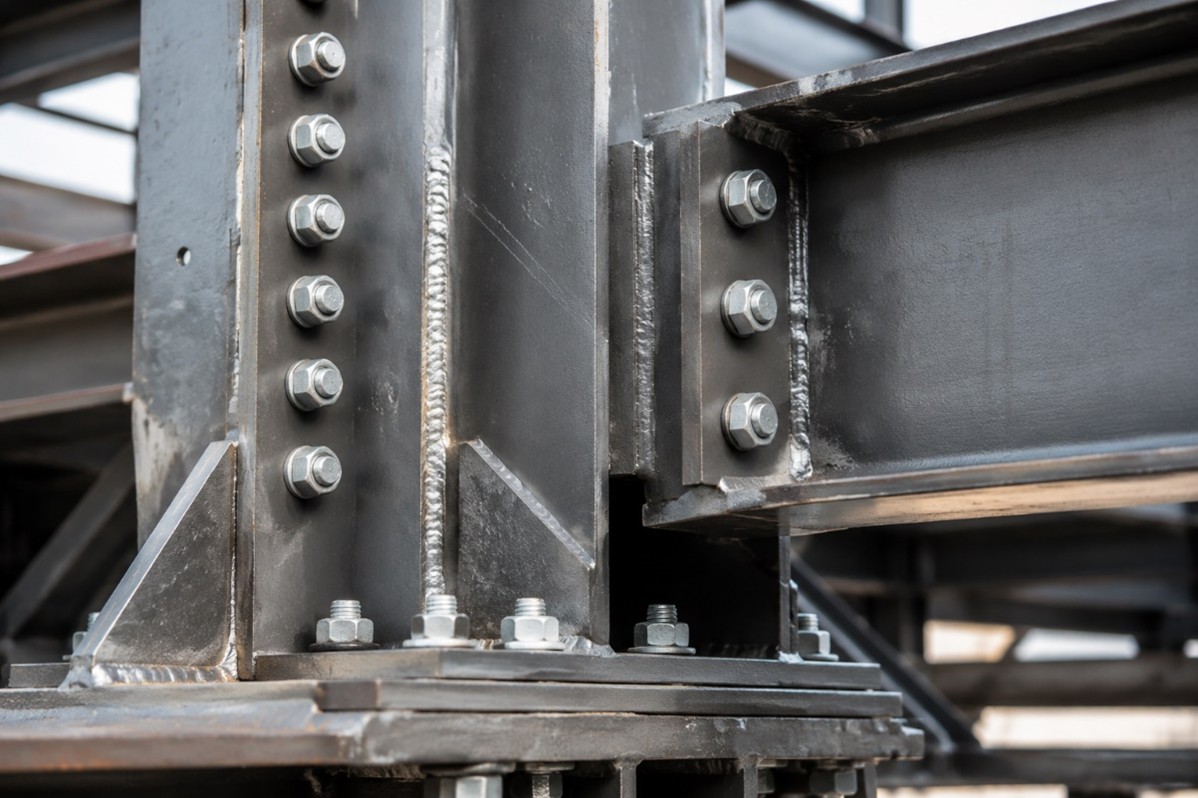
Connections are among the most critical components of steel structures. The performance of the entire structural system often depends on the proper design and detailing of connections between beams, columns, and other structural members.
Three-dimensional modeling allows engineers to develop more precise connection details by visualizing how components interact in space. Bolt arrangements, weld locations, connection plates, and other details can be carefully examined and optimized within the digital model.
This level of detail improves the constructability of the structure and ensures that connection behavior aligns with the assumptions made during structural analysis.
Relationship Between 3D Design and Construction Processes
One of the most important advantages of three-dimensional structural modeling is its direct connection to the construction process. When structural elements are modeled accurately, the digital model can serve as a reliable reference for fabrication and site installation.
Fabrication drawings, material lists, and assembly information can be derived from the model, helping manufacturers and construction teams work more efficiently. This approach reduces errors in fabrication and improves the overall workflow between design offices and construction sites.
Impact of 3D Design on Reducing Project Costs
Three-dimensional design can contribute significantly to reducing project costs. By identifying potential design conflicts early in the design phase, engineers can prevent costly changes during construction.
Accurate modeling also improves material estimation, which helps project managers plan budgets more effectively. When structural components are precisely defined within the digital model, procurement and fabrication processes become more predictable.
As a result, projects can be delivered with better cost control and fewer unexpected expenses.
Key Software Used in 3D Steel Structure Design
Several specialized software platforms are commonly used in the design and modeling of steel structures. These tools allow engineers to create detailed structural models, perform advanced analysis, and coordinate design information across different disciplines.
Software solutions such as structural analysis programs, 3D modeling platforms, and Building Information Modeling (BIM) systems have become essential tools in modern engineering practice. By combining analytical capabilities with visual modeling, these technologies help engineers develop more accurate and efficient structural solutions.
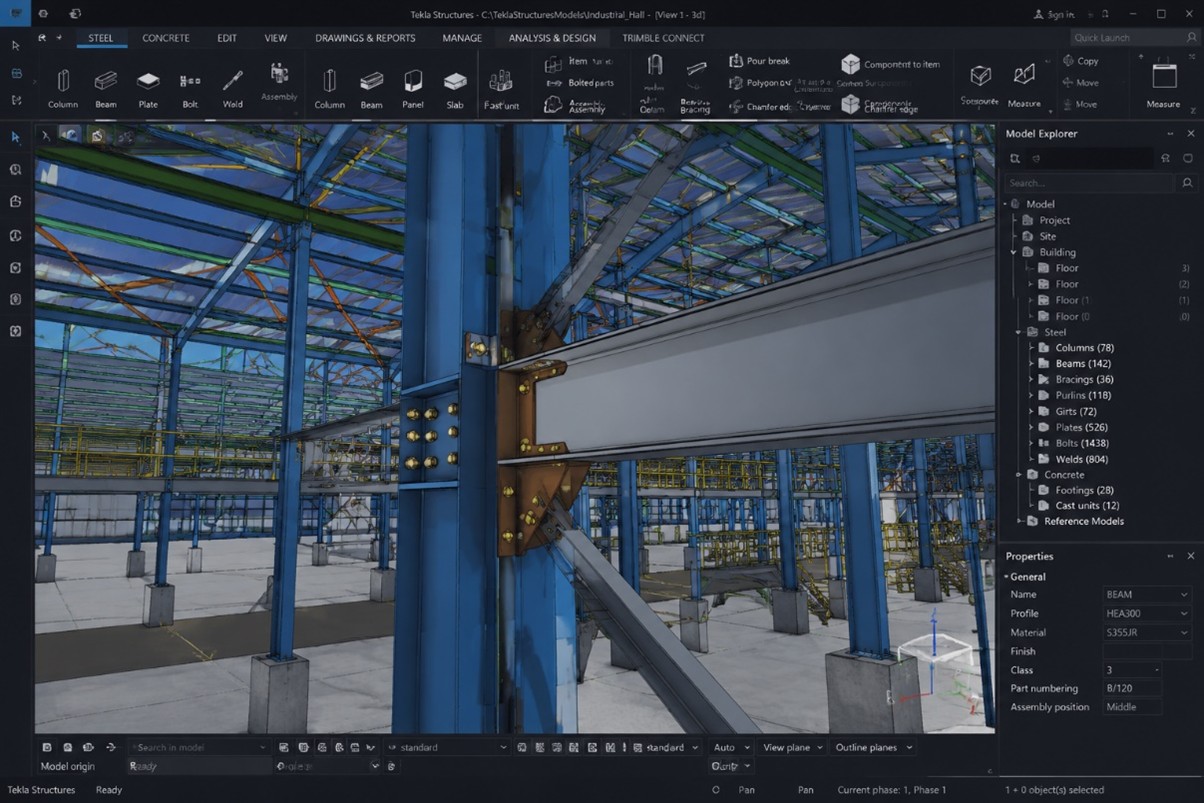
Example of Steel Structure Modeling in Tekla Structures
Among the specialized software tools used for modeling and detailing steel structures, Tekla Structures is widely recognized in the construction industry for its powerful capabilities. This software allows engineers and detailers to create highly accurate three-dimensional models of steel structures in which all structural components—including beams, columns, connection plates, bolts, welds, and other fabrication details—can be defined within a unified digital environment.
A key advantage of Tekla Structures is its ability to produce constructible models. In this approach, the 3D model is not only used for visual representation but also serves as a reliable source for generating fabrication drawings, material take‑offs, and detailed production information. Because of this capability, the model becomes a central reference for coordination between design engineers, fabrication workshops, and construction teams.
Accurate modeling in Tekla helps identify potential construction issues before fabrication begins. This reduces the likelihood of errors during manufacturing or site installation and improves coordination among different participants in the project. In large steel structure projects, such tools play an important role in enhancing precision, minimizing rework, and improving overall project efficiency.
However, it is important that fabrication models created in Tekla be based on verified structural analysis and design results so that full consistency is maintained between engineering calculations and construction detailing.
Role of BIM in Modern Project Management
Building Information Modeling (BIM) represents a significant advancement in the management of construction projects. Unlike traditional models that focus primarily on geometry, BIM integrates a wide range of information related to structural components, materials, construction sequencing, and project management.
Within a BIM environment, each structural element can contain detailed information such as material specifications, section properties, connection details, and fabrication data. This information allows project teams to manage design, coordination, and construction activities more effectively.
By integrating structural models with architectural and engineering systems, BIM helps detect conflicts between different disciplines and improves overall project coordination. It also supports better planning, scheduling, and cost management throughout the lifecycle of a construction project.
Conclusion
The design of modern steel structures has evolved significantly with the advancement of digital engineering tools and three-dimensional modeling technologies. Today, structural engineers are able to analyze complex structural systems more accurately, coordinate with multiple disciplines more effectively, and connect design decisions directly with construction processes.
In regions such as Azerbaijan, where projects must respond to diverse environmental conditions including wind, seismic activity, and varying climatic loads, the use of advanced three-dimensional design methods becomes even more important. These tools enable engineers to evaluate structural behavior under realistic conditions and develop solutions that meet both safety and performance requirements.
Ultimately, three-dimensional design and integrated modeling approaches help bridge the gap between engineering analysis and real-world construction. By improving coordination, reducing uncertainties, and supporting more efficient project execution, these technologies play a vital role in the successful delivery of modern steel structure projects.