


The Art of Field Engineering, Hidden Stresses, and the Unwritten Rules of Structural Ironwork
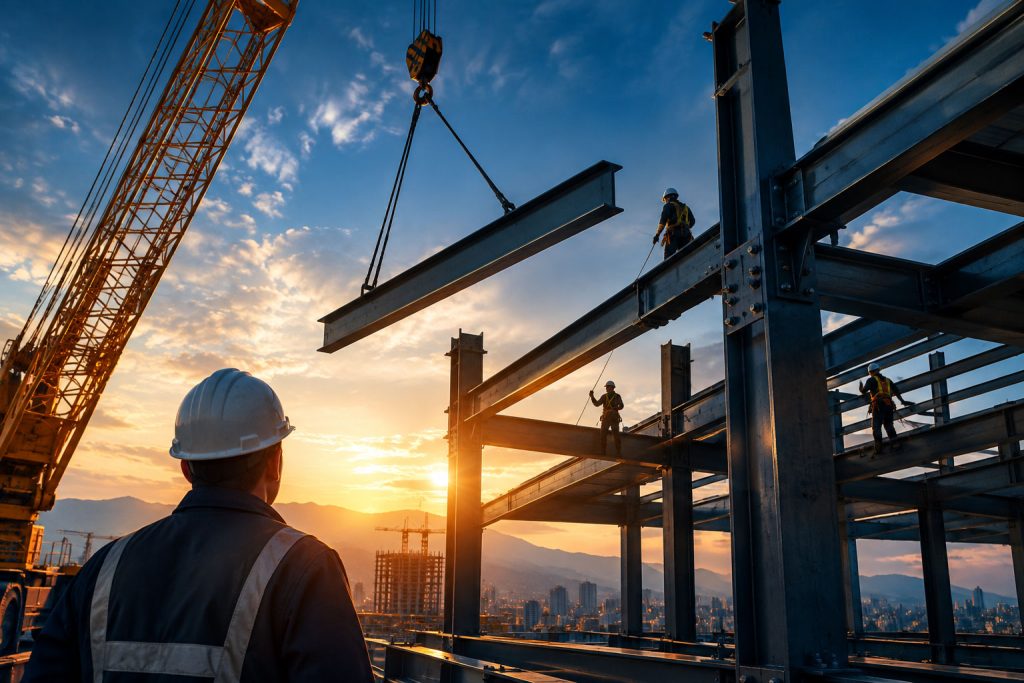
You might assume that the official life of a steel structure begins the moment the heavy flatbeds roll onto the jobsite—air brakes hissing against the dust, tons of wide-flange beams clattering against timber dunnage, and the crane operator answering the rigger’s whistle with the drop of a hook.
I am here to tell you that you are looking at the wrong scene. The real story of any steel structure began weeks, perhaps months, earlier—buried deep beneath cubic meters of foundation concrete. Throughout my career in steel erection and value engineering, I have witnessed base plates set so casually, with such utter disregard for the fundamental principles of structural load path, that you would swear the crew was placing living room furniture rather than the structural anchor of a multi-story building. This amateur carelessness is the very first nail driven into the coffin of project quality. I have lost count of how many jobsites I have walked onto, only to find base plates that bore zero resemblance to an engineered, level plane.
Let me take you back to a specific coastal project—a memory that still serves as a teaching moment for my junior engineers. The shoreline winds were relentless; they were stiff, salty gales that would tear a sheet of paper straight from your clipboard. On that site, the foundation base plates had everything going for them—except the most critical requirement: being level. To dodge the brutal, expensive backcharge of chipping out green, set concrete and correcting the footing elevations, the foundation contractor resorted to the oldest, most insidious site hack in the industry: aggressive, un-engineered shimming. They crammed thin, inconsistent sheet-metal shims beneath the base plates, trying to cosmetically fake a level elevation over a warped, poorly poured concrete footing.
At a superficial glance, everything looked plumb, square, and tidy. But the moment the first multi-ton column was walked into place and set down, the entire assembly sat on trembling, point-loaded feet. This is not a laughing matter for a professional. When a column is off-plumb or rocking by merely ten millimeters at the foundation bed, that subtle eccentricity amplifies into dozens of centimeters of out-of-plumb deviation twenty meters up in the air.
What happens then? Up on the fourth tier, the crew fights the drift using pry bars, come-alongs, and the brute, unnatural lateral pull of the crane line to wrestle the column into connection. The bolts slide into the splice, the connection gets buttoned up, and everyone sighs with relief, thinking they have “solved” the problem. But that forced alignment is a lie. That mechanical rage remains permanently locked inside the crystalline matrix of the steel as frozen residual stress, waiting for the first seismic shock or hurricane-force wind to trigger failure.
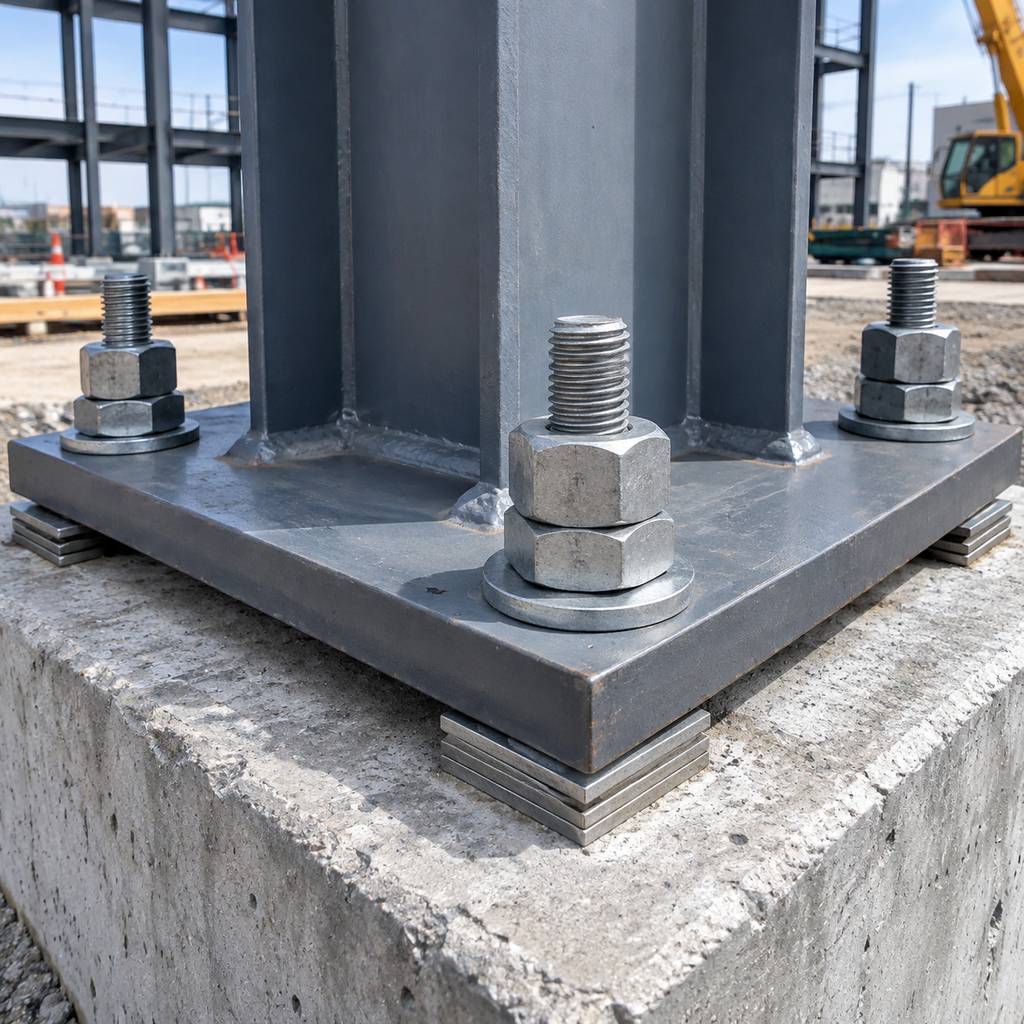
Image Concept: A high-contrast, ultra-sharp close-up shot of a massive steel column base plate resting on threaded anchor bolts and leveling nuts. A green laser level line is visibly striking the chamfered edge of the plate, proving millimetric precision against the concrete pedestal. The environment is industrial, focused, and professional.
A plumb, perfectly bedded base plate is the honor of the erection engineer. If you invest the hours on day one—while the anchor bolts are still exposed and before non-shrink grout is pumped—using an optical transit, laser leveling, and rigid template bracings to lock that plate down, you are showing ultimate, professional respect to the future of that building.
And then comes the grouting. I have watched crews treat non-shrink precision grouting like casual masonry filler, slapping it under the plate on a whim. That grout is not cosmetic; it is the physical bridge that feeds the massive structural load of the column down into the bedrock of the footing. If the grout is placed without proper head pressure, fluid consistency, and vibration, massive air pockets and voids form beneath the plate. Those hidden voids become reservoirs for condensed moisture and aggressive, hidden corrosion.
Ten years down the road, while the architectural facade looks pristine, the structural base of your column is literally rotting away from beneath. A base plate is never just a flat piece of structural plate steel; it is the spinal lumbar of your entire structural skeleton. To me, setting a base plate is identical to a mountaineer securing a foothook on an icy cliff: if your footing is unstable, the entire ascent ends in a fatal fall.
Battling the Wind: When the Naked Column Trembles
Have you ever stood on an open deck and watched a twelve-meter column shudder in a coastal wind like a dry willow branch?
It is, without exaggeration, the most nerve-wracking sight on an erection site. You hoist the column, the ironworkers guide it over the anchor rods, tighten the nuts, and the crane cuts loose so the riggers can hook the next piece of iron. Those few unbraced minutes are pure suspense. This is the moment of truth where site discipline is laid bare.
Too many inexperienced erection crews, obsessed with superficial schedule velocity, set the column, spin down the anchor nuts finger-tight, and immediately signal the crane to swing toward the next member. That is a colossal operational mistake. A tall steel column left without immediate temporary erection guy-wires or rigid diagonal pipe shores is no different than a man trying to stand on one leg during a windstorm.
A single unexpected gust catches the flange, and the equilibrium snaps. As that column sways back and forth, catastrophic localized prying forces and high cyclic tension loads tear through the anchor bolts and green grout beds below.
Now, picture what happens when an ironworker forces that fatigued, laterally vibrating column into a rigid moment connection with an incoming floor beam. What have you created? You have declared a covert civil war inside your structural frame. The steel column desperately wants to relieve its lateral strain and return to its natural equilibrium, but your rigid connection refuses to yield.
I drill this rule into my crews day after day: Lock the column in space first; only then do you touch the secondary bolts and field welds. Temporary erection bracing is not site dressing; those guy cables and push-pull struts are your mechanical safety nets. The column must stand so plumb, rigid, and immovable in its three-dimensional coordinates that it feels like an organic extension of the earth itself, not an isolated piece of rolled steel left behind by a crane hook.
That disciplined stillness prior to framing is what genuine structural engineering looks like in the dirt. If you look down your gridline and see steel swaying in the breeze, your process is broken. Contractors constantly complain that setting diagonal cable braces eats up valuable crane hours. My answer is unyielding: the ten minutes you invest setting two guy cables costs a thousand times less than the nightmare of plumbing a twisted, locked-up twenty-meter frame after the floor decks are hung.
A column that shudders during erection is not merely moving; it is crying out for structural restraint. Listen to it.
The Silent Crime: The Truth Behind Field Burning and Torched Splices
Let us confront an ugly workshop reality: mismatched bolt holes.
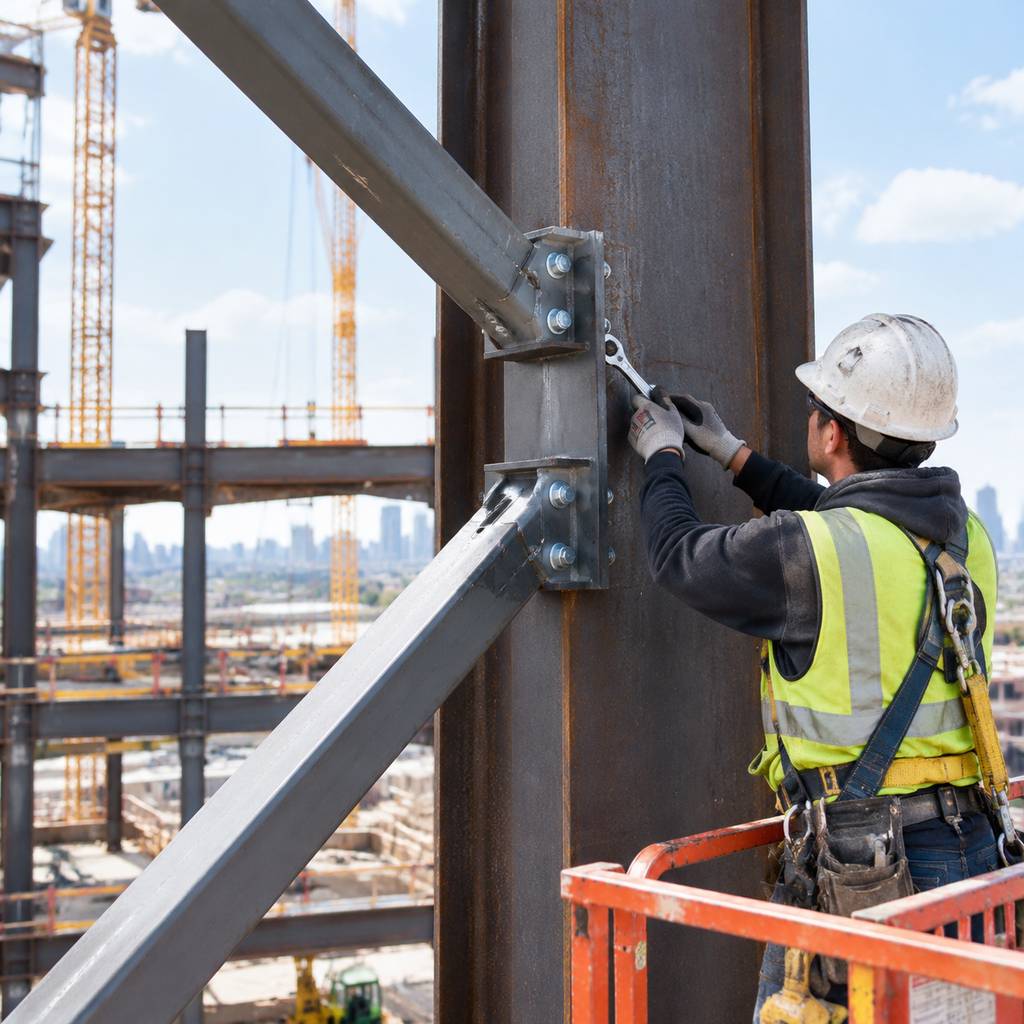
This issue turns my stomach every single time I witness it. We all know the theory: the 3D Tekla model was clash-free, the CNC drill lines were calibrated, and the shop drawings were approved with clean stamps. Yet, out on the steel deck, fifty feet above the mud, the bolt holes in the shear tab fail to align with the beam web by five agonizing millimeters.
This is the exact threshold where an engineer’s professional ethics are weighed.
An impatient, corner-cutting superintendent will inevitably shout: “Fetch the oxy-fuel torch! Wash out the hole a few millimeters and drive the bolt home!”
Call it what it is: an engineering felony.
When you enlarge a bolt hole using an open cutting torch, you subject that localized structural steel to uncontrolled thermal trauma. You obliterate the refined grain structure of the steel around the hole, leaving a jagged Heat-Affected Zone (HAZ) riddled with microscopic gouges, micro-fissures, and brittle martensite. Those ragged, flame-cut rims act as violent stress concentrators. Furthermore, you destroy the mechanical bearing tolerance. Instead of a precise standard clearance hole designed for uniform load transfer, you create an oversized, sloppy oval.
What happens under service loads? When heavy dynamic wind gusts or lateral seismic waves rack the structural frame, that sloppy connection slips. The joint undergoes cyclical micro-impacts as the bolt shanks slam violently against the jagged perimeter of the wallowed-out hole. Over time, that micro-movement eats away at the integrity of the entire connection from the inside out. It is a slow, asymptomatic structural cancer.
Now, turn your attention to field welding.
The number-one nemesis of open-air structural welding is ambient moisture. Many of our flagship projects are situated in coastal or high-humidity regions where the air is heavy with marine fog and condensation. A structural welder is cold, physically exhausted from working in tied-off safety harnesses, and desperate to cap the joint and go home.
If that welder strikes an arc on cold, damp structural steel without first applying preheat via a multi-flame heating torch, disaster is guaranteed. The intense heat of the electric arc instantly disassociates the atmospheric moisture () into hydrogen and oxygen. That atomic hydrogen diffuses deep into the molten weld puddle. As the weld cools rapidly against the massive thermal sink of the heavy steel beam, that trapped hydrogen triggers Hydrogen-Induced Cold Cracking (HICC)—also known as underbead or delayed cracking.
These hairline fractures are invisible to the naked eye. They lie dormant underneath a cosmetically sound weld face, ticking away like structural time bombs.
I do not stand over welding crews to play site policeman; I stand over them to ensure the rosebud torch is fired up, moisture is driven off, and the required preheat temperature is validated across the joint with temperature-indicating crayons before a single rod is struck.
Structural welding is an uncompromising marriage of metallurgy, thermal control, and artisan discipline. If your welding technicians do not understand interpass temperature control or how to prevent cold-lap along thick structural flanges, you are literally gambling with the lives of every soul who will ever occupy that building.
Order in the Chaos: Jobsite Logistics as a Quality Multiplier
A construction site is inherently turbulent: churned clay mud, the deafening roar of heavy diesel equipment, swinging loads, and the physical weariness of ironworking crews battling the elements.
If your project management posture mirrors that site chaos, you have surrendered before you start. Heavy industrial logistics is the science of imposing systematic order onto raw physical entropy.
I have walked jobsites where fifty-foot structural girders were haphazardly dumped in the furthest, muddiest corner of the staging yard. Days later, I watched a 200-ton crane burn forty-five minutes of premium hourly rental time just to dredge a single buried beam from beneath an unorganized mountain of iron.
That is not simply lost money; that is structural abuse. Dragging girders through clay damages primer coatings, clogs bolt holes with grit, burns out machinery hydraulics, and destroys the crew’s focus before the first pick is even rigged.
I am unapologetically obsessed with erection sequencing.
When you plot the erection plan for next week, you must know down to the bolt and washer exactly where each piece belongs in three-dimensional space. Steel components must arrive on the site like numbered puzzle pieces, staged in reverse order of assembly.
Staging yard management is the ultimate lever of value engineering. The fewer times a piece of steel is picked, turned, dragged, or restaged, the cleaner, straighter, and safer your final structure will be.
World-class erection runs on choreography, not site shouting. If you stand on your deck and see smooth, uninterrupted arcs of the crane boom, clean picks straight from dunnage to connection seats, and unhurried ironworkers waiting calmly with spud wrenches at the ready, you are witnessing project management. If you hear non-stop shouting, rigging lines being forced, and cranes making sudden emergency stops, you are witnessing crisis management.
Step back from the tonnage and think of the human hands that make it exist. Structural steel erection is brutal, unforgiving physical labor carried out by calloused hands. Ironworkers who spend ten hours a day walking narrow flanges in sub-zero winds or blistering heat carry unimaginable physical stress. When you see unengineered “speed” and dangerous shortcuts taking root on a deck, nine times out of ten it is not malicious sabotage; it is the raw impulse of exhausted human beings desperate to wrap up and step off the iron.
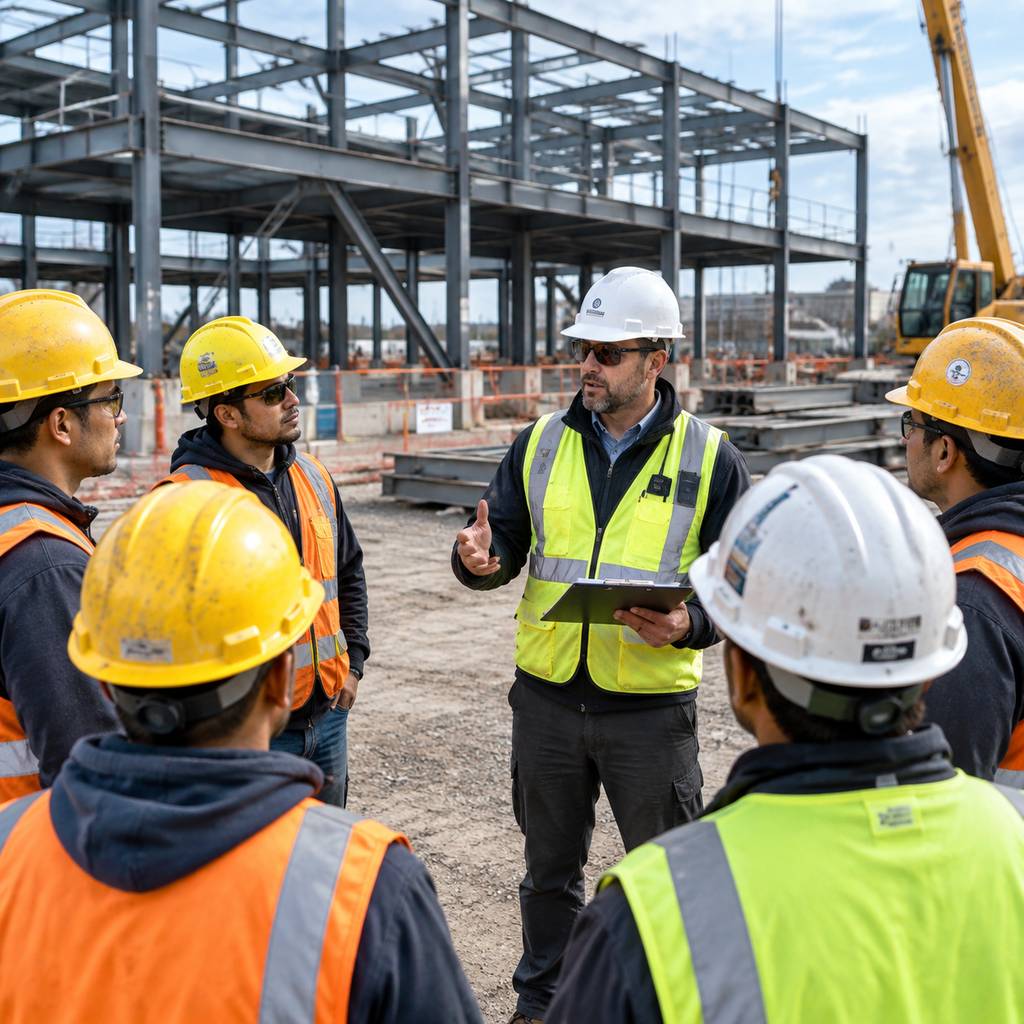
Here is where your posture as a project manager, QA/QC director, or resident engineer transforms. Your mission is not mechanical policing; it is cultural leadership.
You must reframe precision not as a bureaucratic checklist, but as the ironworker’s personal safety line. When you stand on the deck talking to a welder, do not recite a sterile code clause. Look him in the eye and say: “Brother, make this root pass so clean and penetrate so deep that if an 8.0-magnitude earthquake hits this city twenty years from now, this beam-column node will be the reason the people inside walk out alive to see their children.”
That is what it means to humanize the work.
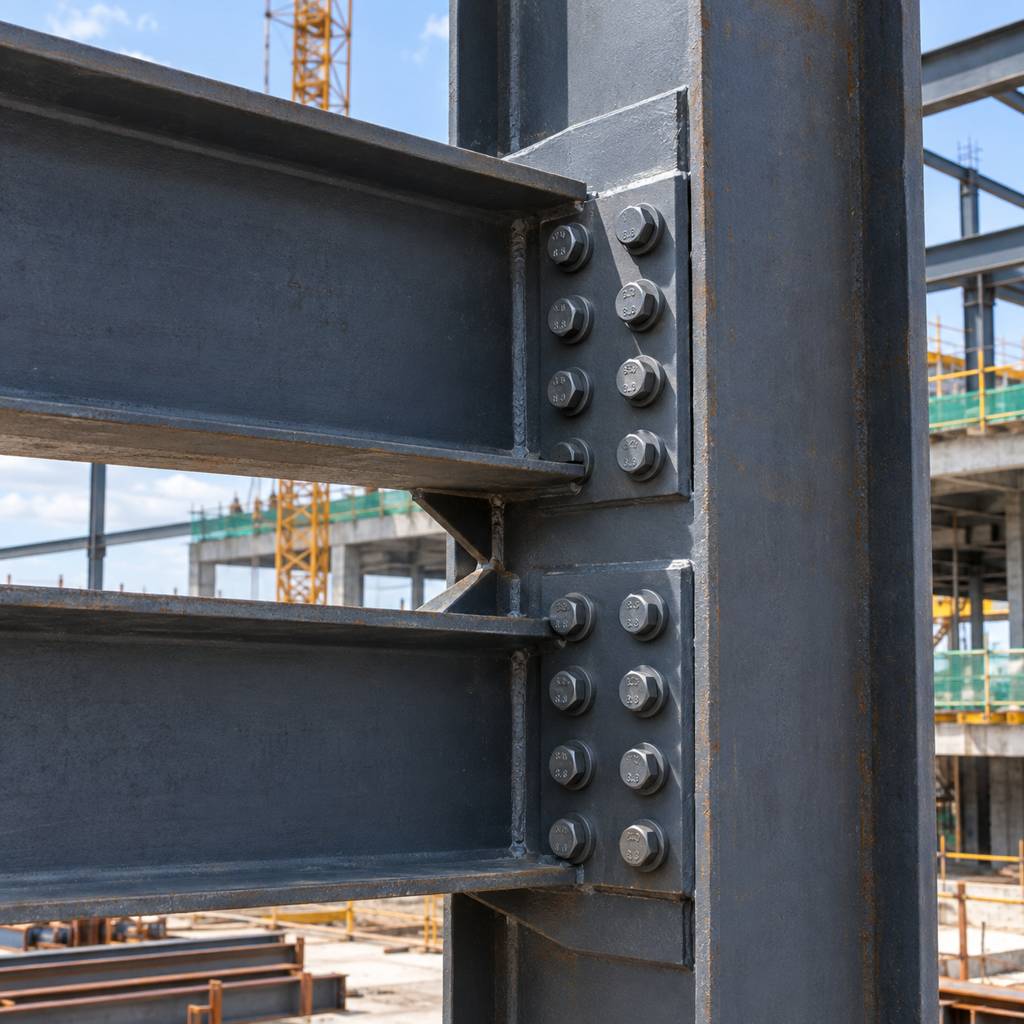
The design drawing is not sacred scripture; it is a structural hypothesis. When you walk out of the site office and step onto the concrete slab, you quickly learn that physical geography does not care about your clean CAD lines. Footings shift slightly during high-volume pours; embedded anchor clusters tilt under pump hose pressures; column plumbs deviate under unexpected ambient thermal expansions.
The amateur contractor responds to these physical discrepancies with mechanical violence: swinging ten-pound sledgehammers, forcing come-alongs until wire ropes fray, and battering members into place with crude force. That is not construction; that is mechanical desecration.
You must learn to accept the As-Built reality of the field. If an anchor bolt group has drifted twenty millimeters off center-line, you do not force a beam into place with the crane line, pre-loading your columns with permanent bending moments. You halt the operation, pick up the phone, and engage the structural design team with transparency: “This is our measured as-built field condition. Let us review the connection geometry, run the load calculations on an engineered eccentric shear plate, and verify that our lateral stiffness remains fully intact.”
That is what genuine professionalism looks like. That is mature engineering agility.
Professional mastery lies in understanding exactly where you must be utterly uncompromising—such as weld preheats, bolt torque calibrations, and true base-plate bearing—and where you must adapt intelligently to field conditions through engineered revisions rather than brute mechanical force. Real engineering is the art of solving unvarnished physical problems, not burying them behind cosmetic welds and bent flange plates.
Structural steel projects are, in every meaningful sense, our children. Long after our site trailers are packed up, our cranes are dismantled, and our footprints are washed away by the rain, the steel frames we erected remain standing. They will stand exposed for decades—perhaps centuries—battling howling winter blizzards, baking summer suns, and the cyclic racking of earthquakes.
When you and I are long gone, will that frame stand with unyielding, quiet pride, or will it buckle at the first severe lateral load because someone took an oxy-fuel torch to a bolt hole or skipped a grout bed twenty years prior?
Erecting structural steel is not a profession for the small-minded. It is a pursuit for the serious, not merely because we swing massive multi-ton picks through the sky, but because we shoulder an awesome social responsibility.
Every high-strength bolt you torque to tension, every root pass you inspect, every base plate you set dead-level with an optical transit is your personal signature stamped directly onto human history. If you compromise on those details, you are compromising your own professional soul.
Approach the iron with deep patience, with discipline, and with a vision that extends fifty years past your own retirement. Burn this rule into your memory: A structure erected with meticulous craft today will never require structural rehabilitation tomorrow.
That single standard represents the absolute summit of structural engineering.
Young engineers frequently ask me how one survives the sheer pressure, the brutal deadlines, and the chaotic friction of the jobsite while keeping their engineering ethics entirely intact. My answer never wavers: You must fall in love with the steel.
When you respect the metal—when you understand that every connection you snug and tension is safeguarding the sanctuary of families, workers, and children decades from now—the chaotic site pressures dissolve into white noise.
For a true builder, every sunrise on a steel deck is a masterclass. I know veteran engineers with thirty years on the iron who still break into an honest smile the moment they inspect a textbook, soundly welded moment splice. That deep, nerdy reverence is the hallmark of greatness.
You must look at a structural frame and learn its dialect: feel where the iron is overstressed, trace where the load vectors want to travel, and understand where the silence of a rigid, plumb frame signifies genuine structural stability.
Do not allow anyone to tell you that modern 3D building modeling and automated fabrication have rendered physical, field-level craftsmanship obsolete. That is the naive delusion of people who build structures only inside computer monitors. No software on earth can replace the intuitive genius of a seasoned master fitter who lays his bare palm across a heavy column flange and detects the micro-vibrations of an improper crane pick or an unevenly loaded seat angle.
Technology is merely your instrument; the true power resides in your engineering brain and the calloused hands of your erection team. When you operate as an integrated unit, working in profound harmony with the steel, no structural problem can withstand your collective will. That alignment is the dividing line between ordinary commercial contracting and timeless structural engineering.
Years from now, when you drive down an avenue with your loved ones and point through the window at a soaring steel skyline, you will be able to look at them and say with absolute peace of mind: “I helped set that iron. And I know it will stand.”
That is the supreme reward of our craft. Not the monthly progress payment, not corporate titles, but that profound, quiet certainty that the work of your hands was true.
So the next time you walk onto a jobsite, step out onto the slab with your head up. Remember that you are not simply assembling an iron skeleton; you are forging the physical backbone of the future. Every column you plumb is a triumph of static equilibrium. Every bolt you draw tight with calibrated torque is an unbreakable promise made to the next generation.
Look after the details. Listen to the steel. Build it so true that history itself will respect your work.
Now get out there on the iron, my friend—and build it right.