


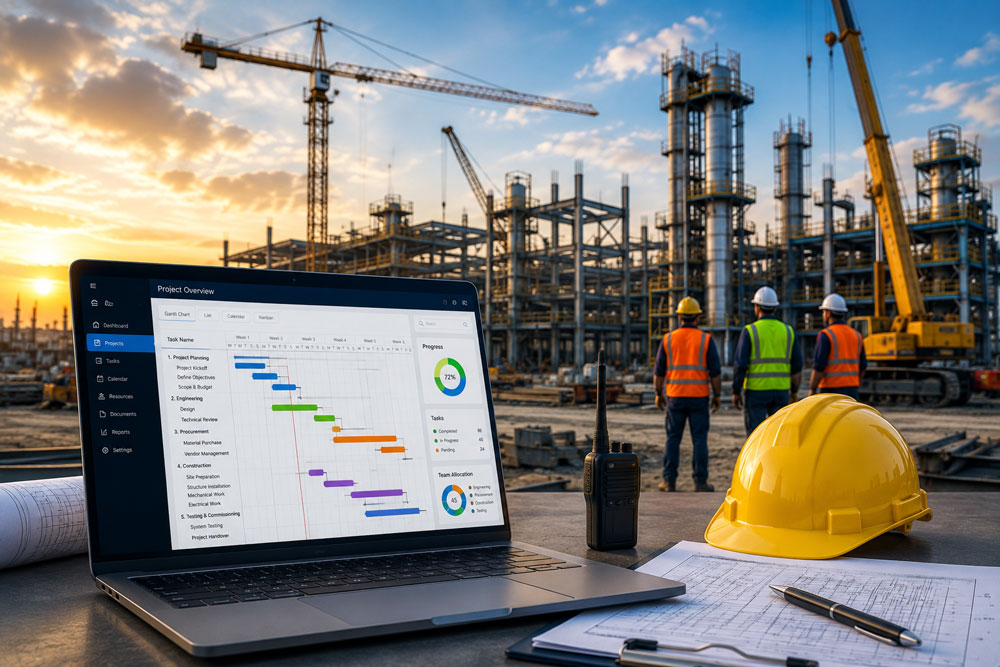
Project Management Software in Industrial Construction:
When a Minor Delay Never Stays Minor
Imagine a major industrial project where a critical piece of equipment is scheduled to arrive on site Monday. It doesn’t. The vendor promises delivery by Wednesday. On the surface, it looks like an inconsequential two-day slip. In far too many projects, teams brush this off; minor delays become routine, and the assumption is that a little extra hustle down the line will make up for lost time.
Come Wednesday, the equipment arrives, but the installation crew isn’t ready because the predecessor activity is stalled. That preceding task was waiting on approved shop drawings that were delayed by a few days. Suddenly, you are no longer dealing with a simple two-day delay. Multiple crews are standing by waiting on one another, the heavy-crane rental schedule is blown, labor hours are burned without progress, and subsequent activities are pushed to the following week.
What appeared to be a harmless adjustment has triggered a real, costly cascade of ripple effects. This is precisely where project management software proves its true value—not merely to generate passive status reports, but to expose the downstream consequences of an isolated operational hiccup.
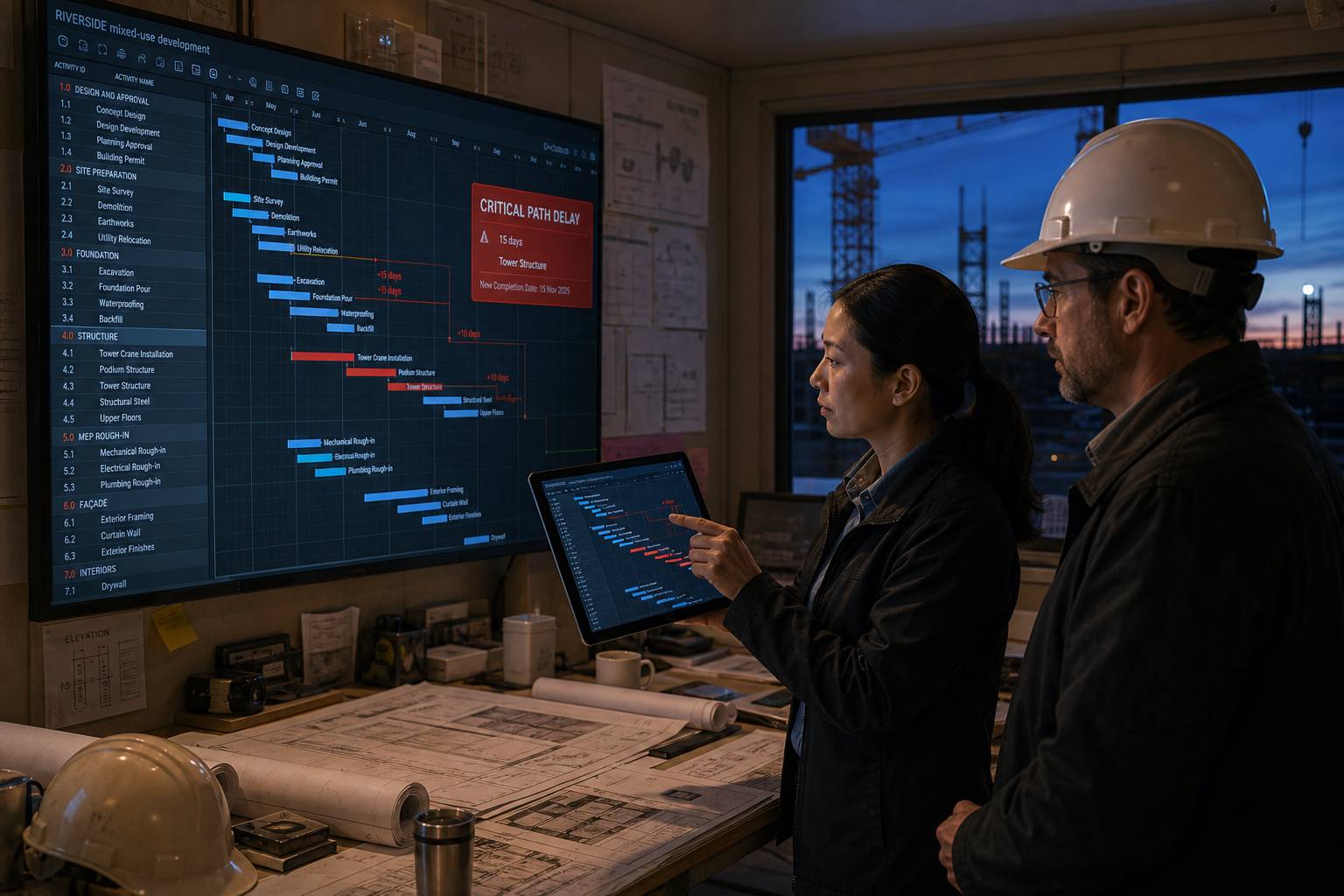
Software Is Not the Project Manager; It Is the Second Set of Eyes
A widespread misconception is that project management software is supposed to run the project on its own. It cannot. Software possesses no on-site experience, feels none of the field pressure, cannot negotiate with suppliers, and cannot evaluate the real-world severity of a delay using human intuition.
Its real value begins where the human brain gets overwhelmed by sheer volume and interdependencies. An industrial project is not a mere checklist of tasks; it is a dynamic network of interlinked variables. Engineering depends on owner approvals, procurement depends on finalized design, logistics depend on procurement, installation depends on on-site delivery, and final commissioning hinges on completing the entire chain.
On a small job, you might track these relationships in your head. On an industrial site with thousands of interdependent activities, doing so without a dedicated digital system is nearly impossible. Software serves as a second set of eyes—one that doesn’t just log data, but maps connections, giving the project manager a reality-grounded picture of the site.
The Core Value: Forecasting the Immediate Future
Mention project management tools, and most people immediately think of Gantt charts, percent-complete metrics, and weekly progress reports. While useful, these represent the bare minimum.
The paramount utility of advanced scheduling software is predictive forecasting. Suppose an activity slips by five days. If that activity lies on the Critical Path, those five days will shift downstream sequences, compress milestone buffers, and push the final commercial operation date. Professional scheduling engines like Primavera P6 or Microsoft Project—when modeled correctly—expose this chain reaction instantly.
Instead of simply learning that a task is behind schedule, you see the exact ripple effect on crew mobilizations, equipment releases, and contractual milestones. This marks the difference between an overdue status update and an early warning. Large-scale projects don’t need late post-mortems; they need proactive warnings that leave room for corrective action.
Percent Complete Can Be Deceptive
One of the most overused metrics in project meetings is “percent complete.” The project is reported as 30% complete, then 55%, then 70%. But what does that number actually reflect?
A project can easily rack up a high completion percentage by burning through simple, high-volume, linear tasks while high-risk, bottleneck activities haven’t even broken ground. In such scenarios, a high percentage offers a false sense of security while masking critical exposure.
Project management software must help teams look past surface-level metrics to see which work packages are truly derisked, which critical interfaces remain unresolved, and which bottlenecks threaten overall delivery. In industrial construction, a few low-volume, highly complex tasks often carry far more weight than dozens of routine activities because they hold the entire delivery chain together.
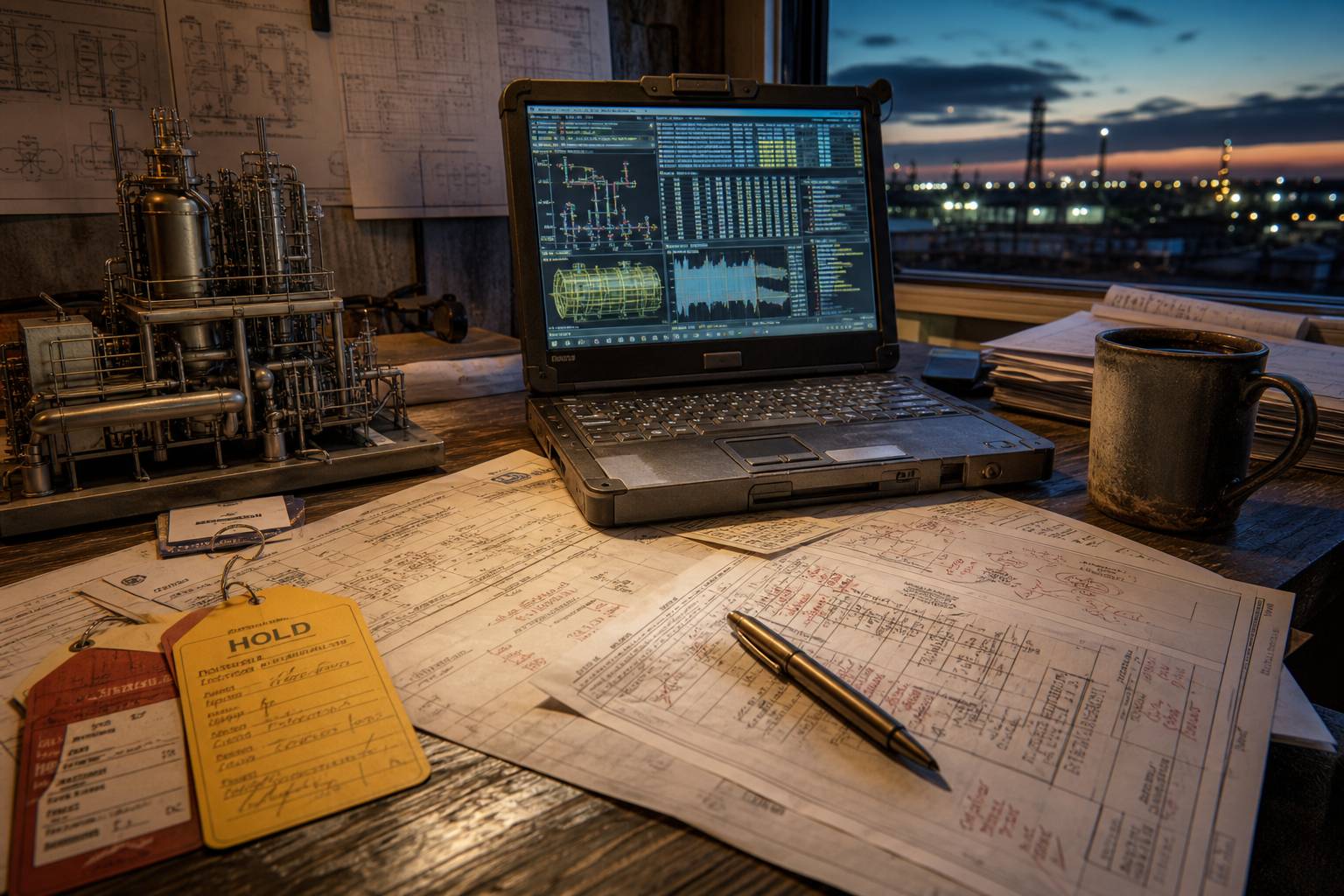
The Real Project Reality Gets Buried in Disconnected Files
An industrial capital project is never captured entirely within a schedule file. It lives across RFIs, submittals, vendor drawings, meeting minutes, purchase orders, daily field logs, and site photos.
The core challenge is data fragmentation. A change is agreed upon in a site meeting but never logged in the system. A field modification is executed without notifying the central engineering team. Weeks later, when a clash occurs, the project team is forced to reconstruct reality from scattered email threads and conflicting recollections.
Modern project management platforms solve this by establishing a Single Source of Truth. They maintain an auditable digital trail of every decision, showing what was modified, when, and on what technical basis. This is not just for current dispute mitigation; it ensures that teams rely on verified project records rather than guesswork.
Software Creates Value Only When It Bridges the Field and the Office
On major industrial builds, the project office often operates in a clean, structured data bubble. Schedules exist, progress curves are plotted, and weekly meetings proceed smoothly. On site, reality tells a different story: a critical line is shut down, a skid has not cleared customs, specialized labor is tied up elsewhere, or the crew is working off an unissued drawing revision.
If field updates take days to reach the project office, executive decisions will consistently lag behind physical reality. Project management software is meant to eliminate this latency. Site engineers must be able to log field conditions on the spot, route RFIs immediately, and track roadblocks until closed.
However, technology alone solves nothing without adoption. Digital transformation in construction doesn’t start with buying licenses; it starts with behavioral alignment.
Detaching Procurement from Field Execution Guarantees Delays
In industrial projects, procurement schedules cannot exist in an isolated spreadsheet. Every procured item is destined for a specific installation window on site, meaning the purchase order date is only one small link in the chain.
The full procurement lifecycle must be mapped directly to the construction logic:
- When is engineering design frozen?
- What is the manufacturing lead time?
- How long will factory acceptance testing (FAT), ocean freight, customs clearance, and inland transport take?
- Will the site civil foundation and heavy-lift rigging be ready when the shipment hits the gate?
If these dependencies are not built directly into the integrated schedule, procurement may look “on time” on paper, yet the equipment will arrive completely out of sequence. In capital projects, catastrophic delays rarely originate in manufacturing—they stem from ignored interface dependencies.
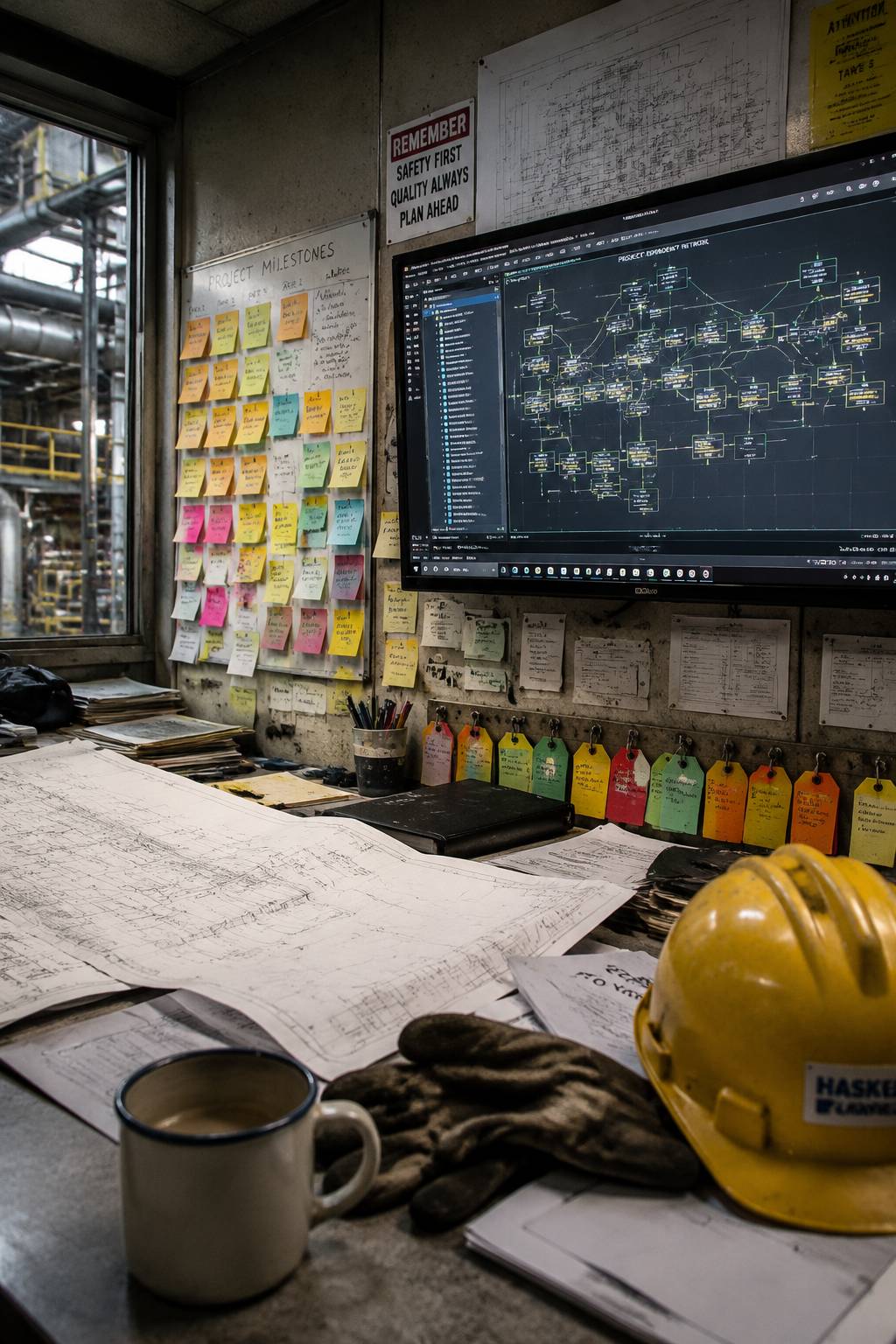
The True Cost of Delay Extends Far Beyond the Direct Labor Rate
When an activity slips by just three days, the cost is never limited to three days of idle labor. The downstream financial footprint is substantially broader.
Secondary costs quickly compound: crane rentals must be extended or remobilized, specialized subcontractors are thrown off schedule, laydown yard storage fees accrue, and project cash flows get disrupted. A minor schedule deviation inevitably triggers both technical and financial shocks.
When project controls software integrates time, resources, and cost forecasting, it shifts the project manager’s mindset from “How far behind are we?” to “If this trend continues, what is our total exposure?” This transforms software from a backward-looking reporting tool into an active decision-making engine.
Choosing Software Is About Project Needs, Not Brand Names
Primavera P6, Microsoft Project, and comprehensive Enterprise Project Portfolio Management (EPPM) platforms each have their place. However, before asking which tool is “the best,” organizations must clarify their operational pain points.
- If the priority is deep critical-path analysis and multi-tier baseline control, a robust CPM scheduling engine is mandatory.
- If the primary challenge is document control, RFI tracking, and subcontractor coordination, a cloud-based collaborative platform is essential.
- If procurement-construction alignment is broken, you need advanced material-tracking integration.
A common mistake is assuming that an enterprise-tier system built for massive industrial EPC mega-projects is suitable for a leaner organization with simpler operational workflows. Software should serve the project workflow, not force the project into rigid software constraints.
Expensive Software Used Poorly Is Less Effective Than a Well-Maintained Excel Sheet
This reality may sound harsh, but it is accurate. If a company invests heavily in enterprise platforms but fails to train users, enforces no standard Work Breakdown Structure (WBS), and lacks data governance, the software quickly becomes an expensive overhead burden.
Conversely, a disciplined team running clear, standardized workflows can achieve remarkable control even with simpler tools. The competitive edge does not stem solely from the technology itself, but from the operational discipline behind it. Software delivers value only when it becomes an integrated daily habit rather than a slide in an executive presentation.
Sustainable Implementation Starts with One Small Process
Organizations do not need to digitize every operational process on day one. Attempting a total overhaul overnight typically triggers user resistance and failure.
A far more effective approach is to start with a focused, high-impact workflow—such as schedule baseline updates and variance tracking. Establish clear ownership:
- Who logs actual field progress?
- Who analyzes variance against the critical path?
- What is the review cadence?
- Who has the authority to make schedule adjustments?
Once this cadence becomes second nature, the system can expand to integrate procurement tracking, change management, RFIs, and cost forecasting. Successful digital adoption starts with disciplined, repeatable processes, not bloated systems.
The Future of Capital Projects: Radical Visibility
The most significant advantage of modern project management software is not paperless administration; it is end-to-end operational visibility.
A project that previously required hours of phone calls, disjointed spreadsheets, and combative meetings to diagnose can now be evaluated with clarity. Teams can immediately pinpoint which work packages are lagging, which procurement deliveries are late, which submittals are overdue, and which critical decisions are bottlenecked.
As industrial projects grow in complexity, answering these questions manually becomes impossible. Software cannot solve every technical challenge on site, but it brings issues to light early. In industrial construction, early detection is often more valuable than late problem-solving: when an issue is caught early, alternatives are cheap and flexible; wait too long, and your corrective options shrink while costs skyrocket.
Final Thoughts
In industrial construction, major failures almost always originate from issues that initially appeared harmless: a two-day supply slip, an unapproved revision, a delayed component, or a miscommunicated handover between trades. Each event is minor on its own, but together they define project performance.
When chosen and maintained with discipline, project management software illuminates these small deviations and connects the dots before they compound. Its greatest value is not summarizing what happened yesterday, but demonstrating clearly what will happen tomorrow if no action is taken today.
Projects that only record history will always react too late. Projects that model the immediate future retain control. In an industry where margins are thin and schedules are unforgiving, that forward-looking capability is what separates a tightly controlled project from an exhausting recovery operation.
Ultimately, capital projects are built by people—by their engineering judgment, field experience, and daily decisions. But people make better decisions when they have an accurate, real-time picture of project reality. When software delivers that visibility, it ceases to be a mere administrative tool; it becomes the core decision-making infrastructure of the project. And in industrial construction, weak decision-making infrastructure will always manifest as delays, rework, and cost overruns.
That is why, on an industrial site, a minor delay never stays minor.