



Urban infrastructure projects play a vital role in supporting sustainable city development and improving public services. In Baku, the increasing scale and complexity of urban construction projects require contractors to possess strong technical capabilities, strategic planning skills, and effective decision-making processes. Establishing clear competency criteria can help ensure project quality, efficiency, and long-term success in the development of urban infrastructure.
1. Introduction and The Strategic Shift
transactional phase in a project’s lifecycle; it is a profound strategic decision that determines the structural integrity, economic viability, and architectural legacy of the city’s urban expansion. As Azerbaijan continues to solidify its position as a regional hub, the standards required for infrastructure delivery have evolved exponentially. The traditional model of contractor selection—heavily skewed toward the lowest bidder—has proven to be a catalyst for project delays, budget overruns, and compromised quality. This paper presents a comprehensive framework for selecting contractors who possess the technical depth, financial resilience, and digital maturity required for modern Baku.
2. The Multi-Layered Engineering Perspective
Engineering a project in Baku requires a profound understanding of unique geotechnical and urban challenges. A contractor’s competency must be evaluated based on their performance history in similar, high-density, or coastal environments. We must scrutinize:
Geotechnical Expertise: The ability to execute foundation works in Baku’s specific geological strata, including coastal water table management.
Technical Value over Price: A shift in focus toward the “Total Life-Cycle Cost” (TLCC) rather than immediate capital expenditure.
Supply Chain Integration: The capacity to balance local content requirements with a robust international network for specialized materials (e.g., high-grade seismic-resistant steel, specialized glazing for high-rises).

3. Analysis of Execution Risks in the Baku Construction Market
The construction market in Baku is inherently volatile due to external economic pressures and localized logistical challenges. Contractors must possess a sophisticated risk-mitigation strategy. Key focus areas include:
Currency Hedging: A mandatory requirement for any contractor dealing with large-scale material imports to prevent mid-project financial default.
Coastal Environmental Factors: The salt-laden air and high humidity in Baku necessitate specific, non-negotiable standards for structural protection and facade maintenance, which must be clearly defined in the pre-qualification tender documents.
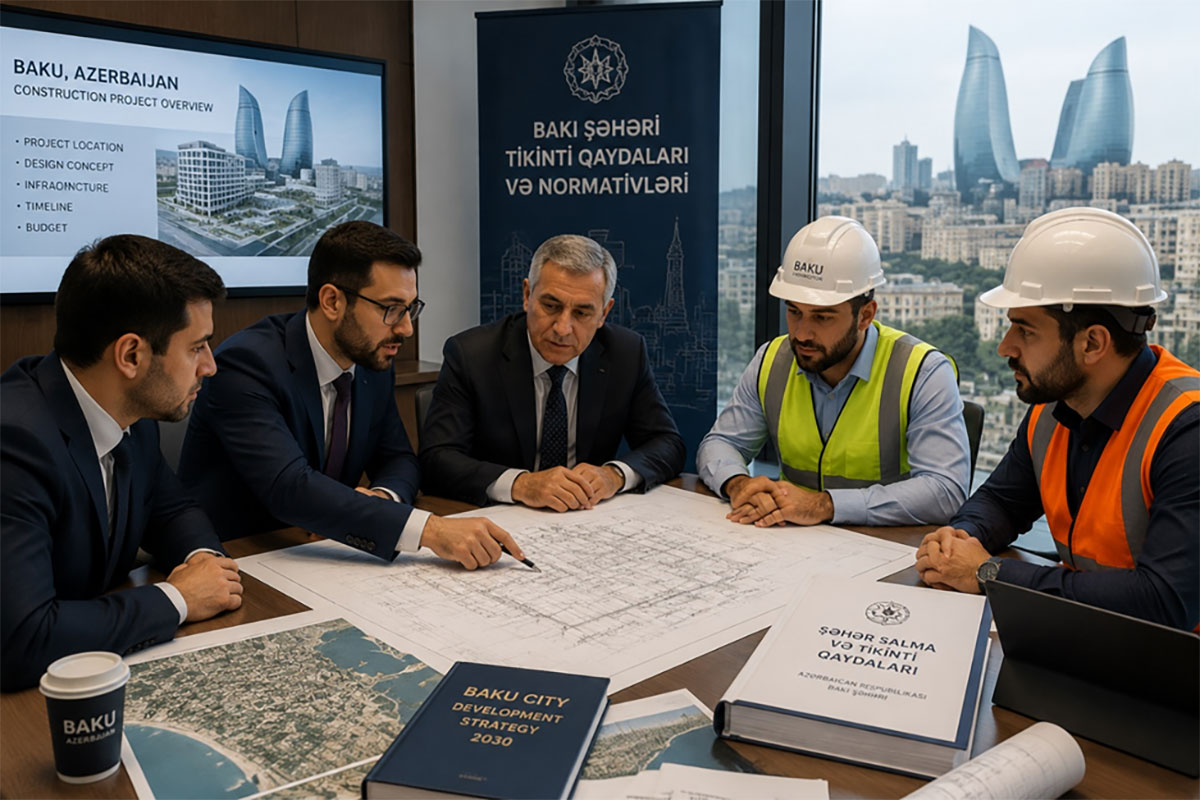
Structural load-bearing diagrams and coastal corrosion protection protocols.
4. Best Practices for Contractor Selection: The QBS Framework
The transition from cost-based bidding to Quality-Based Selection (QBS) is essential for Baku’s development. Our assessment framework dictates that technical proposals must carry at least a 70% weight in the final decision-making matrix. Key evaluation criteria include:
Execution Methodology: Detailed, site-specific work sequences that demonstrate an understanding of urban congestion and traffic management.
Proposed Project Team: Beyond company-level qualifications, we analyze the specific experience of the project manager, lead engineer, and on-site safety officer.
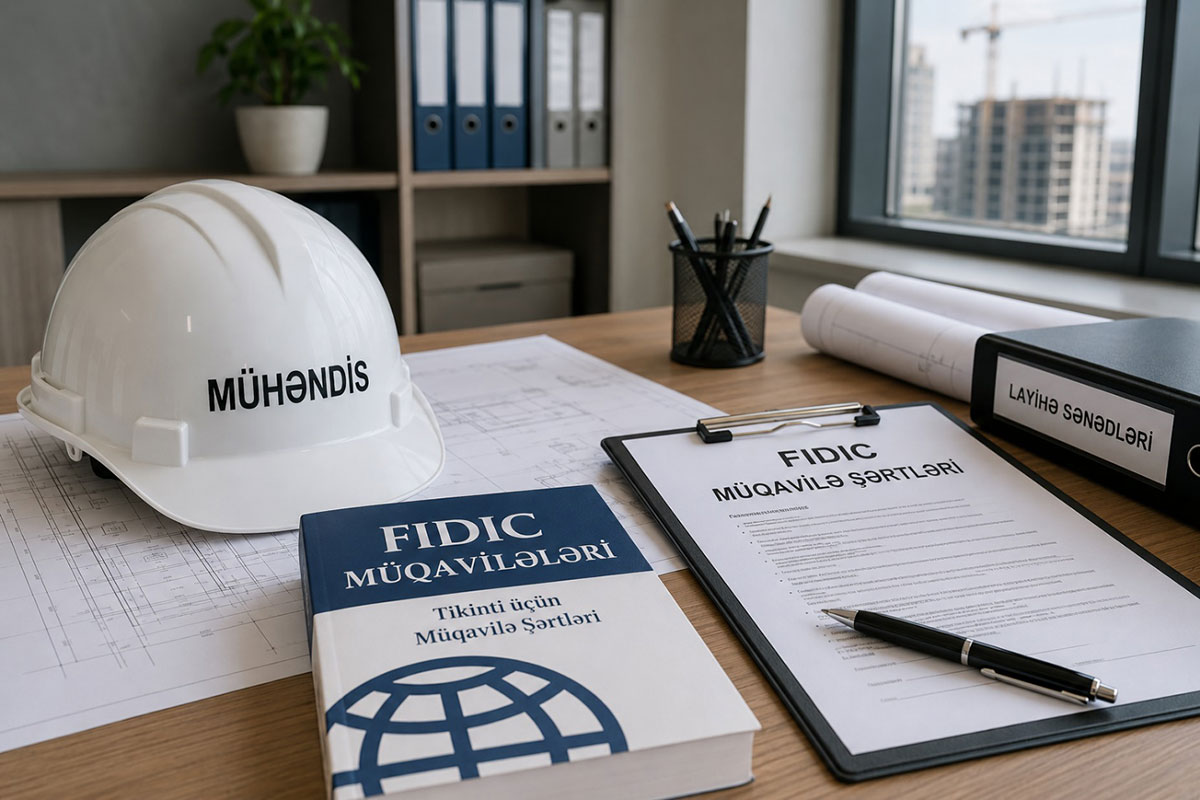
Consultant Integration: We strongly advocate for the appointment of independent third-party consultants who are well-versed in FIDIC Contracts (Red, Yellow, and Silver Books). Their role is to ensure transparency in cost estimation, claim management, and performance reporting.
5. Statistical Analysis and Management Efficiency
The correlation between modern management tools and project success is undeniable. Our statistical analysis of major construction projects in Baku over the last decade yields several critical findings:
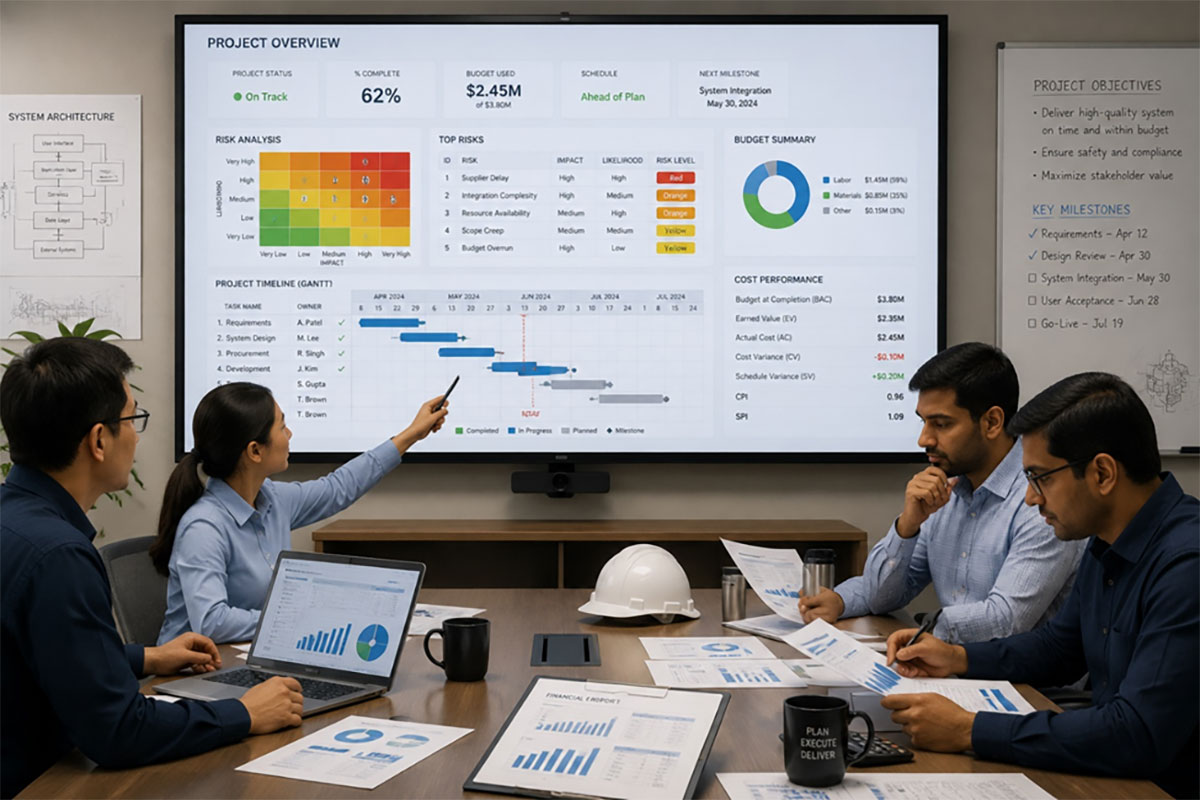
Software-Driven Efficiency: Projects that mandate the use of advanced scheduling software—such as Primavera P6 or MS Project—demonstrate a 15% to 20% reduction in schedule slippage compared to manual or legacy planning methods.
Quality Management Systems (QMS): ISO 9001 certification is no longer a “value-add”—it is the baseline for pre-qualification. We place significant emphasis on the contractor’s ability to maintain a Continuous Improvement Loop, where project audits lead to measurable process adjustments within a 30-day window.
6. Strategic Risk Management and Case Study: The New Baku Metro Line
Often, the choice of a contractor is dictated by their approach to high-risk technical challenges. The recent expansion of the Baku Metro serves as a seminal case study.
The Problem: Unstable, water-saturated ground conditions threatened the integrity of the tunnel boring process.
The Contractor’s Strategy: Rather than choosing a low-cost, shallow-foundation approach, the selected contractor implemented an extensive pre-grouting and soil consolidation solution.
The Result: While the initial budget was significantly higher than competitors, the long-term maintenance costs are estimated to be 40% lower, proving that in Baku’s specific environment, technical resilience is the most important financial metric.
Bar charts comparing project delays using various software; detailed cross-sectional diagrams of the metro pre-grouting process.
7. Case Study: High-End Residential Complex (Yasamal)
The development of the Yasamal luxury residential complex illustrates the necessity of integrated design-build partnerships.
Facade and Architectural Quality: The project utilized specialized facade engineering to withstand Caspian wind loads, demonstrating the importance of contractor experience in high-end exterior finishing.
Energy Efficiency: By implementing smart building management systems (BMS), the project achieved a 25% increase in energy efficiency compared to baseline national requirements.
Legal Framework: The success of this project was underpinned by strict adherence to the Azerbaijan Public Procurement Law. The contractor’s ability to navigate the complexities of local content requirements (domestic labor and materials) while sourcing high-tech international components was critical to avoiding legal bottlenecks.
8. Digital Transformation: BIM and Common Data Environments (CDE)
The future of construction in Baku is inextricably linked to digital maturity. We are moving beyond paper-based documentation into:
Building Information Modeling (BIM): A requirement for all tier-one contractors. We demand the delivery of a Level 2 BIM model at a minimum, ensuring that spatial conflicts (clash detection) are resolved virtually before site mobilization.
CDE Implementation: All project stakeholders—architects, engineers, contractors, and owners—must operate within a single Common Data Environment. This ensures real-time updates and eliminates the “information silos” that typically cause rework.
Architectural render of Yasamal residential project; simplified schematic of a BIM-integrated construction workflow.
9. Conclusion: The Future Landscape
The Baku construction market is evolving. Moving forward, the following three pillars will define the “Best-in-Class” contractor:
Technical Resilience: The ability to prioritize geotechnical and structural durability over short-term cost savings.
Digital Mastery: Total adoption of BIM and digital workflow management to increase efficiency and transparency.
Environmental Stewardship: Sustainable construction is no longer a corporate marketing tool; it is a regulatory requirement. Contractors must demonstrate clear plans for waste management, energy optimization, and sustainable sourcing.
In conclusion, the complexity of urban projects in Baku demands a move away from the traditional, siloed approach to construction. By utilizing the framework of Quality-Based Selection (QBS), integrating FIDIC-standard contracts, and mandating digital transformation, project owners can ensure they are not just building structures, but creating a resilient and modern urban infrastructure for Azerbaijan’s future.