


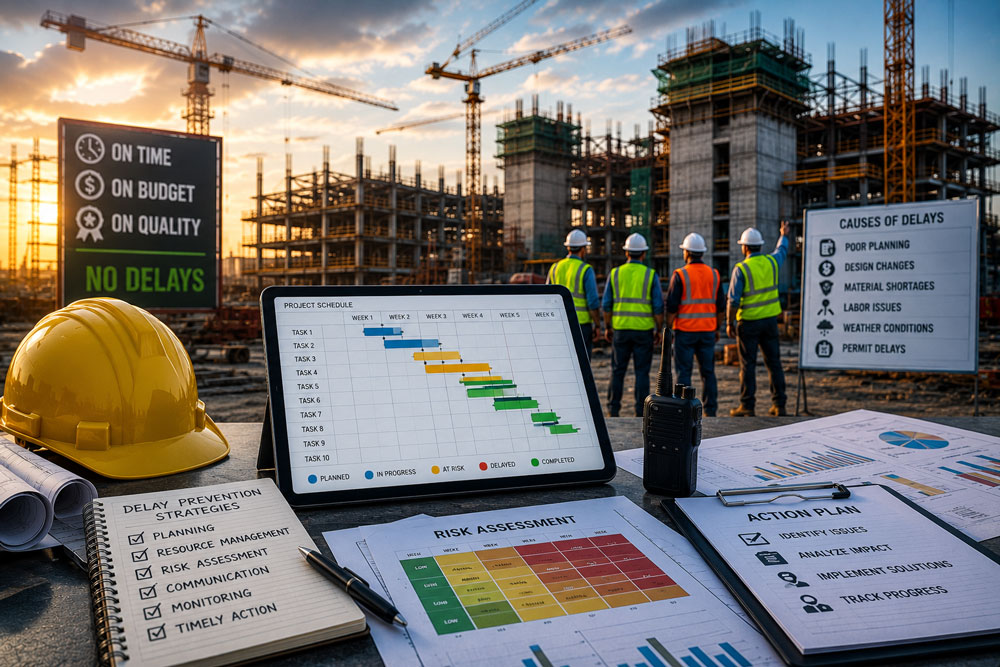
When Time Gets Lost Among Steel Skeletons
If you stand on a construction site early in the morning, right as the sun begins to reflect off the glass facades of the city’s modern skyline, you can feel a peculiar silence. It is not the silence of an absence of sound, but rather the silence of disarray. You can always tell when something is fundamentally off, even if no one says a word. In mega projects, before delay ever shows up in monthly progress reports or Excel spreadsheets, it reveals itself in sheer disorder: in a misplaced tool, in scaffolding erected for no purpose, and in the anxious eyes of a field engineer scanning the Caspian Sea horizon to see if the wind will permit work today.
In mega projects, we face an adversary that we invariably blame on external forces: “Delay.” We claim the client failed to disburse funds, the consultant delayed approvals, high winds stopped operations, or materials never arrived. But the reality is that these are excuses, not root causes. Delay is, fundamentally, the byproduct of a failed dialogue.
Let us be candid: construction projects are like an orchestra. When the rhythm of structural steel procurement is out of sync with facade engineering, the sound produced is not music—it is noise. And that noise is precisely what we define as delay.
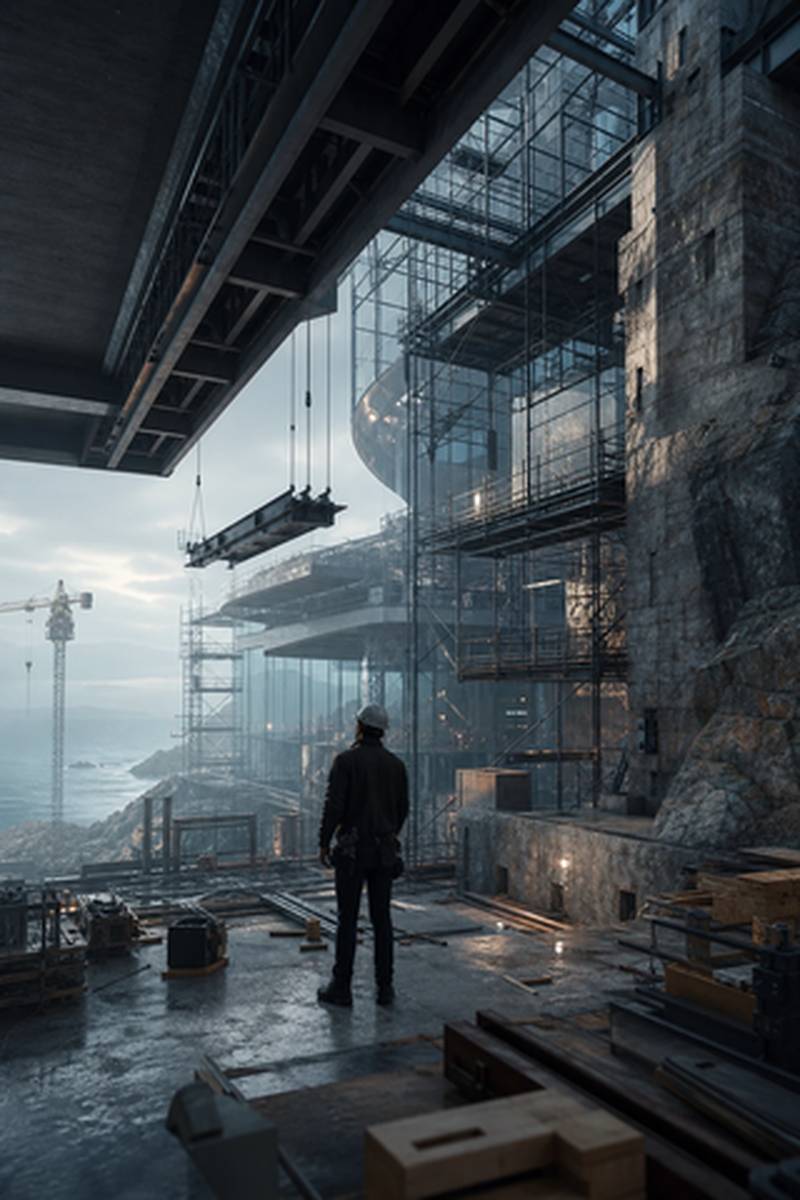
Why Do Projects “Forget” to Finish?
I have always believed that mega projects possess a memory. They remember every single decision made with hesitation and doubt during the initial design phases. If, during those golden early days, you prescribed temporary painkillers instead of making decisive determinations regarding complex facade connection details or structural roof cladding, that project will come back to penalize you down the road.
Deferred decisions are like snow on high mountain ridges: over time, they gather mass and become an avalanche that blocks the entire pass. In a city like Baku, an extraordinary blend of historic masonry and cutting-edge structural steel, we have repeatedly witnessed the severe delays caused by forcing modern construction speed onto a sensitive historical urban fabric. These setbacks have nothing to do with lazy crews or an absence of technical craft; they stem from a failure to comprehend the true geometry of the project.
When we attempt to execute an iconic tower in the heart of a metropolis using the exact same formula applied to a low-rise residential building on the outskirts, we fail. That tower breathes. Its engineering tolerances are different, its materials are significantly more sensitive, and its inherent complexities demand disciplined reflection.
The Art of “Anticipating the Unexpected”
I recall a project where everyone was deeply anxious about the fierce winds sweeping in from the sea, rocking the tower cranes. The initial impulse was to procure heavier, more expensive equipment to fight the wind. Yet the real solution was not more machinery; it was intelligent sequencing. We re-engineered the schedule so that during the hours when Caspian gusts peaked, all work at elevation was suspended, and crews were redirected to lower levels for MEP rough-ins and utility installations. We did not fight the wind; we aligned our workflow with it.
This is the very essence of delay management. Instead of attempting to force a project forward through brute strength—which only leads to structural friction and breakdown—you must identify where the natural momentum of the project wants to move.
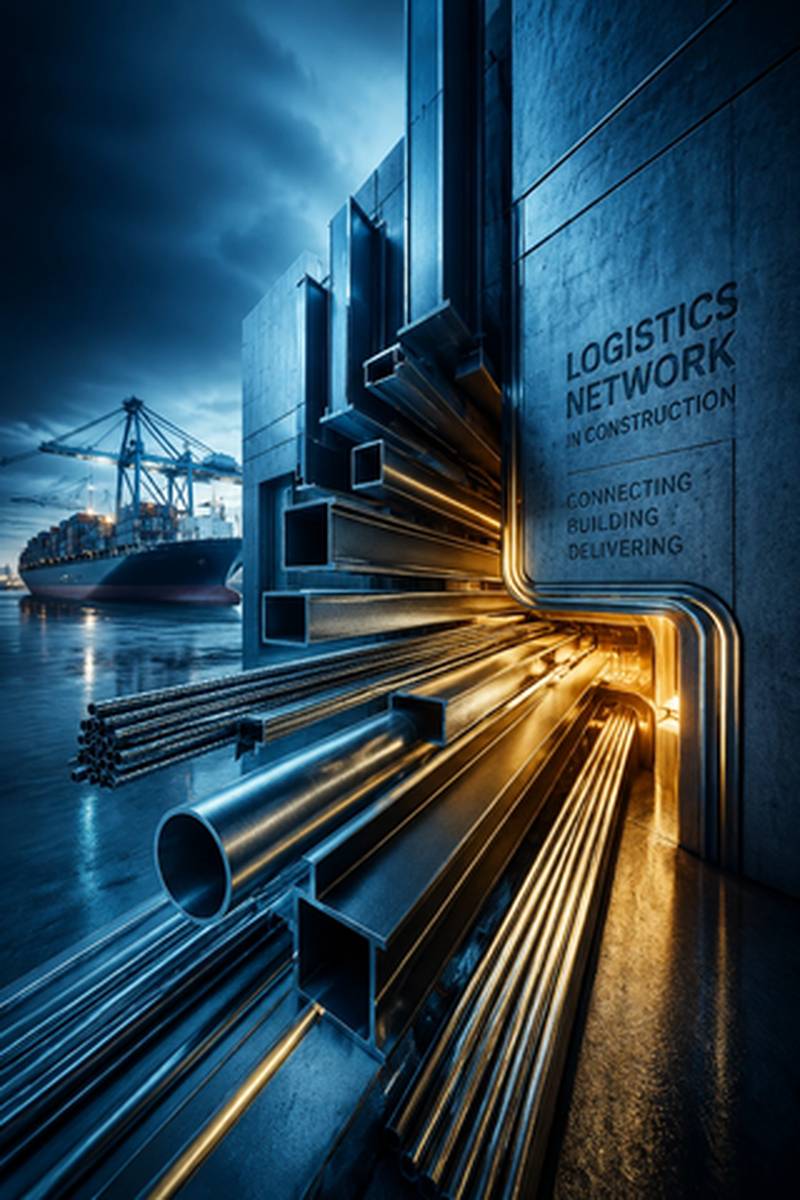
Why Half-Baked Decisions Are Project Enemy Number One
One afternoon, on a jobsite where we were erecting heavy structural steel near the coastline, a young field engineer rushed over in distress: “The column steel hasn’t arrived on site, the supervising consultant hasn’t approved the connection drawings for the transfer beams, and the subcontractor is complaining about idle crane time.”
This is the recurring narrative of every mega project. In the construction industry, we suffer from a hazardous habit I call “the sweet postponement.”
A project manager rationalizes that skipping a decision on interior fit-out details today does not matter because structural top-out is still months away. They convince themselves: “Now isn’t the right time,” “It’s too early,” or “Let’s decide later once the architectural team finalizes their revisions.” These are mere placebos. Half-baked decisions erode the structural momentum of a project from within.
When you push a fit-out or detailing decision to next month, you effectively broadcast an operational signal across your entire supply chain: “No rush.” And the supply chain obliges. Fabricators push back production runs, mills reallocate rolling capacity, and when you are finally ready to break ground on that package, you discover the required materials are locked behind a twelve-week production backlog.
A project is an organism that consumes uncertainty.
In historic urban contexts where maritime winds continually shift site conditions, every micro-decision carries substantial weight. You cannot erect a structural column on engineering assumptions that lack final sign-off. Successful projects are not those that move faster; they are those that decide earlier.
My approach under these conditions is driven by Artificial Schedule Compression.
I consistently challenge my project teams: “Assume the target handover date has been pulled forward by three months. What is your immediate critical path?” This mental framework cuts through decision paralysis. When an engineer operates with the mindset that the operational deadline is tomorrow, they no longer wait passively for consultant approvals on minor structural connections; they take ownership, finalize the shop drawing details, and aggressively drive the approval cycle. They do not wait; they preempt.
Delay begins the very day we choose to wait.
My focus here is not upper management or the project sponsor; my focus is the professional walking the active site. If your weekly meeting minutes have listed a technical issue—such as facade cable routing or fire suppression riser details—as “In Progress” for three consecutive weeks, recognize that you are actively walking into a critical delay. That item is not in progress; it is dying on the vine.
In high-stakes delivery, winning leaders treat open technical RFIs like an infection: they resolve them instantly. If resolving a minor detail requires three direct phone calls or walking straight into the consultant’s design office, do it. The hidden carrying cost of institutional silence far exceeds the price of thousands of tons of structural steel.
In cities where rapid urban development exerts relentless pressure on municipal infrastructure, project time is your only non-renewable asset. Managing a project through passive patience is an operational betrayal of that asset.

Hunting Delays in the Field: Why You Must Step Out of the Office
There is a hard reality in heavy construction: Project progress reports represent the most optimistic version of reality. Sitting in a climate-controlled trailer reviewing Gantt charts and colorful S-curves makes everything look on track. But the true state of a project is never captured on paper; it is felt in the dust and friction of the active jobsite.
I routinely tell my teams: “If you want to catch delays before they materialize on the critical path, you have to walk the site like an investigator.”
This is not routine inspection. Inspection is looking for code violations and non-conformance. This is Active Site Presence—walking the field to listen to the operational cadence of the job. When walking the deck, do not listen to status updates; listen to the pauses.
When you observe a crew of facade installers clustered together in conversation, the question is not “Why aren’t they working?” The question is: “What operational bottleneck is stopping them?” Did the mobile crane arrive late? Are the anchor bracket drawings ambiguous? Are they missing torque wrenches or specialized rigging hardware?
Delay hides in plain sight during moments of standing still.
On complex projects bridging historic fabric with modern superstructures, my site walks follow a rigorous discipline: I look for systemic friction. If you find a massive stockpile of material blocking primary haul routes without operational reason, that zone of the site is dead. You have actively removed production capacity through logistical neglect.
When coastal gales pick up, look at the site superintendent rather than the baseline schedule. Are they actively managing trade reassignments, or simply waiting for the wind to drop? Proactive delay mitigation is the systematic conversion of idle time into productive output. If high winds shut down crane operations at height, is there a structured plan to pivot labor into staging areas, pre-assembly yards, or lower-level MEP rough-ins?
The Most Powerful Question a Project Leader Can Ask
Throughout my career in project delivery and value engineering, I have relied on one foundational question. When walking a site and encountering stalled work or unresolved bottlenecks, I never ask: “Why are you behind schedule?” That question immediately triggers defensiveness and blame-shifting. Instead, I ask:
“What or who is currently preventing you from moving forward?”
That single question reframes the dynamic. The response invariably uncovers the true root cause: ambiguous engineering drawings, pending consultant submittals, or failing equipment. In that exact moment, you pivot from a reactive manager chasing delays into an active problem solver clearing critical obstacles. That is the fundamental difference between projects that maintain momentum and those that collapse under friction.
Remember: a construction site is a living ecosystem. When workflows feel like rusted gears grinding together, next month’s critical delay is already taking root. Do not wait for the end-of-month progress curve to confirm it. Next month’s schedule slippage is already embedded in today’s field hesitation and operational ambiguity.
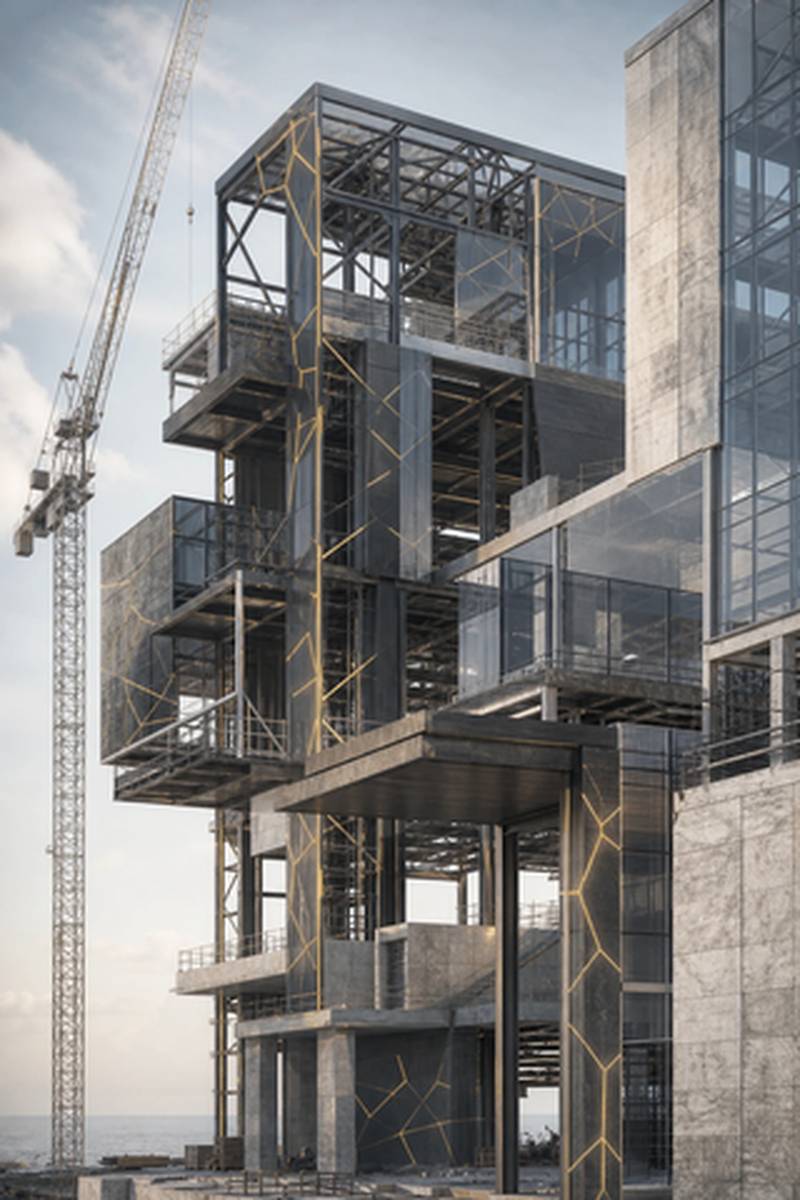
When the Supply Chain Becomes a Chokepoint
In mega projects, the most critical delays often develop within procurement and logistics, remaining invisible until it is too late. Everyone’s attention is locked onto visible field execution: structural frames, facade panels, concrete pours, and milestone handovers. Yet underneath this visible layer lies a vulnerable network: a sequence of human stakeholders, purchase orders, material submittals, logistics corridors, bonded storage, customs clearance, and intricate lead-time coordination. If a single link fails, the entire project stalls on that exact deliverable.
The breakdown occurs when teams treat procurement as a routine back-office administrative task. Procurement is an active operational battleground. A specialized anchor bolt, a custom extruded structural profile, or long-lead MEP equipment with uncoordinated specifications can easily compromise weeks of field execution—not due to its inherent complexity, but because the risk was identified too late.
On numerous projects, I have seen major delays originate not in the field, but inside the engineering office—the exact moment someone said: “Let’s defer that procurement package for now.” In construction management, “later” is always exponentially more expensive than “now.”
The Critical Risk of Single-Point Dependency
A frequent failure mode is locking a project into a single fabricator, one logistics corridor, or an exclusive vendor. As long as supply conditions remain baseline, this vulnerability goes unnoticed. But the moment an unexpected disruption hits—a freight logjam, customs hold-ups, or sudden raw material shortages—a project team that assumed it was in full control realizes it is entirely exposed.
Mega projects, especially in rapidly growing metropolitan hubs with high infrastructure demands, must maintain a strict operational discipline: Multi-channel strategic planning. Never rely on a single critical path for material supply. If primary logistics fail, the secondary supply chain must already be qualified and on standby. This is not merely technical risk management; it is project survival.
Laydown Yards Are the Memory of the Jobsite
Many view laydown yards merely as static holding areas for freight. In reality, the laydown yard is the physical memory of a project. If inventory is poorly tracked, sensitive materials are exposed to weather, or material flow corridors are obstructed, the project will pay for it through severe operational downtime.
The issue is rarely an absolute shortage of materials; it is an absence of material visibility. An item sits in laydown storage, but nobody has verified its location or condition. Or it is buried behind structural steel bundles where retrieval requires days of double-handling. These appear to be minor logistical details, but during critical commissioning windows, they freeze major milestones.
Delay Becomes Lethal When It Is Normalized
On many struggling projects, an initial two-day slip is treated with urgency. Over time, however, delay becomes the daily baseline. The organization learns to operate within chronic slippage. This represents the most dangerous phase of project decay: the team is no longer merely behind schedule; it has culturally normalized being behind schedule.
Once schedule slippage is normalized, quality control inevitably deteriorates. Work is rushed in disjointed phases, engineering coordination slackens, and teams default to reactive justifications. A project capable of systematic execution degrades into a series of late, uncoordinated reactions.
Disciplined management ensures every fractional slip is surfaced and addressed on day one. Not for punitive measures or theater, but to prevent the project culture from ever accepting delay as standard operating procedure.
Dead Time: Where Projects Breathe or Bleed Out
In heavy construction, forward progress is never purely linear. There are specific shifts, weather windows, and transition periods where field activity appears completely halted. Yet a stoppage in physical erection does not have to mean a loss of project momentum. Often, a project is simply bleeding critical momentum through idle waiting.
These dead-time windows typically occur when crews wait on an inspection sign-off, a material delivery, an engineering RFI, or trade handovers. Because they are waiting, supervision assumes nothing can be done. This is a severe management fallacy. During dead time, a project must be dynamically re-sequenced, not shut down.
If crane picks are suspended at height due to gusting winds, site leadership must pivot: staging areas can be organized, structural steel pre-assemblies bolted on the ground, MEP layout verified, or shop drawings cross-checked for clashes. If a mechanical package has not arrived, trade access routes, rigging sequences, and rough-in clearances can be surveyed. When one workface closes, alternative workfaces must be activated.
Weak managers confuse dead time with necessary patience. Seasoned managers convert dead time into productive throughput through the intelligent redistribution of trade labor, focus, and critical-path priorities.
A Project Trapped in Waiting Is Destined to Fall Behind
When waiting becomes chronic, it calcifies into organizational habit. A project accustomed to waiting ceases to drive its own progress and relies entirely on external pressure to move forward. Its internal momentum is extinguished.
The solution is not to apply indiscriminate pressure across the board. The key is isolating which packages are legitimately gated by external factors and which workstreams can continue advancing. That distinction is subtle, but vital. It marks the exact line between a controlled project delivery and an exhausting war of attrition.
Human Rhythm: Why Projects Suffer Burnout
The single greatest analytical blind spot in heavy construction management is treating labor as an abstract data point. We populate spreadsheets with headcount, calculate man-hours, and assume production matches the theoretical model. But projects have an organic human rhythm. A project team operates like a symphony: if individual trades are out of phase, even a team of exceptional specialists produces nothing but operational noise.
Human-induced delays often take shape in the quiet hesitations of coordination meetings: when an engineer harbors doubts but remains silent, when trade interface overlaps generate costly rework, and when decision fatigue leads management to defer difficult determinations to the next meeting cycle.
The Breakdown of Dialogue
Projects that face compounding delays almost universally suffer from fractured communication. Structural design does not interface with site erection teams, procurement is blind to field sequencing constraints, and the supervising consultant talks past the client. Every stakeholder retreats into their silo.
When you observe identical technical debates surrounding a single construction detail dragging on for weeks, you do not have a technical bottleneck; you have a breakdown in common language. Every party interprets delay through their own parochial lens: the owner views it as direct financial exposure, the consultant as regulatory compliance, and the general contractor as production yield.
Delay mitigation means resolving this discord into aligned execution. Leadership must align all stakeholders behind a shared reality: everyone is on the same vessel. If structural engineering introduces unnecessary geometrical complexity, field execution pays the price. If field operations fail to provide real-time constructability feedback, the design package remains defective. Delay is the inevitable cost of this disconnect.
Burnout and the Threshold of Endurance
Mega projects are inherently grueling. When a project enters a negative feedback loop of schedule slippage, collective fatigue settles across the site. Tradesmen and field engineers feel that no matter their output, they remain behind the curve. This is the inflection point where quality declines and indifference replaces operational precision.
I have seen complex infrastructure projects driven into failure by leadership that converts pressure into panic rather than focus. Berating project teams does not recover critical days; it drives away top talent and forces remaining engineers into defensive risk aversion.
An effective project leader recognizes when to release pressure so the team can reset. Occasionally, a disciplined tactical pause to realign trade workflows recovers far more schedule than blindly mandating continuous overtime and uncoordinated night shifts.
The Art of Project Closure and Anticipating the Curve
Ultimately, managing project delay is a disciplined art: the art of seeing the long shadow of impending bottlenecks long before they hit the jobsite.
A critical delay is never a sudden anomaly. It is the cumulative compound interest of hundreds of minor unresolved issues, deferred decisions, and unchecked assumptions made early in the lifecycle. Projects possess memory. Every unscrutinized design change accepted in kickoff meetings, every vague submittal answered with “we’ll coordinate later,” and every overlooked logistical failure in the laydown yard generates compounding schedule debt for the months ahead.
High-performing projects do not necessarily run faster than the rest; they see earlier and decide with greater technical precision. They understand that a minor uncoordinated detail on site is like a hairline stress fracture in high-performance glazing: if you fail to address it immediately, the next environmental shift will shatter the entire pane.
The future of landmark mega projects—whether in Baku, across the broader region, or in any modern metropolitan landscape—is not determined by theoretical Gantt charts generated in expensive scheduling suites. It is determined by the vigilant, probing eye of a project leader who understands one fundamental truth:
Delay begins the very day we sit back and wait for the problem to resolve itself.